
Estimated reading time: 5 minutes
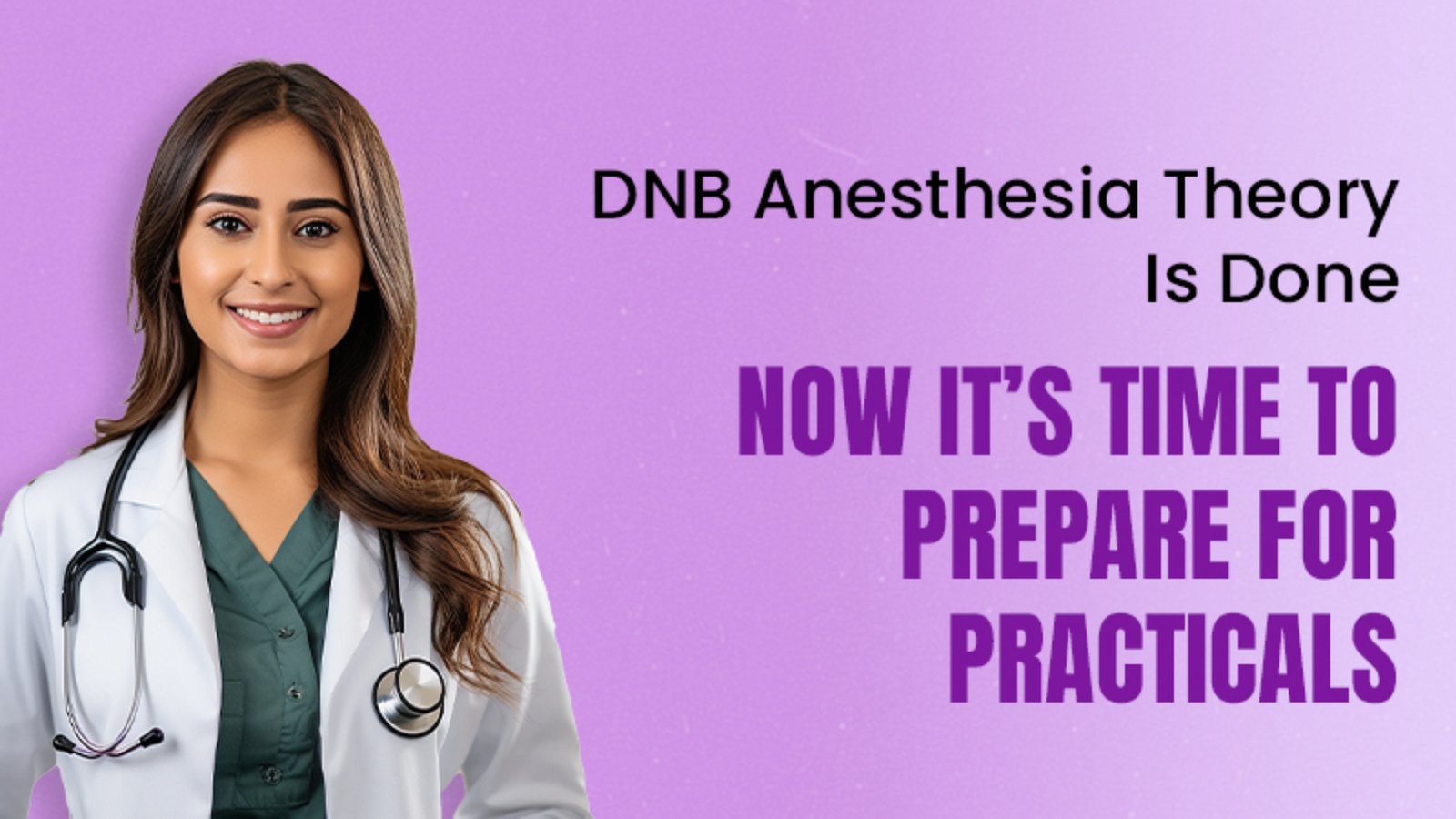
The theory paper is done. The results are out. And for many DNB Anesthesia residents, there is finally a reason to breathe a little more easily.
The results have brought some fantastic performances, with several learners from Conceptual Anesthesia scoring exceptionally well in their DNB examination.
After months of balancing anesthesia, residency, clinical duties, revision, and exam preparation, seeing those efforts turn into excellent scores is a moment worth celebrating.
Congratulations to all the achievers!
But there is one important thing to remember.
The DNB journey doesn’t end with the theory result.
The next challenge is already here: the practical examination.
Your Preparation Needs to Change Now
Theory preparation and practical preparation are not the same.
For the theory exam, you spent hours revising concepts, solving questions, and going through important topics. The practical demands something more active.
You need to be ready to face a case, explain your approach, demonstrate your knowledge, identify equipment, answer viva questions, and make clinical decisions.
So, if you’ve been preparing mainly through books and lectures until now, it’s time to change gears.
Think less about:
“How much more do I need to read?”
And start thinking:
“Can I actually explain and demonstrate what I know?”
What Should You Revise for DNB Practicals?
Your preparation in this phase should be practical, focused, and repetitive.
Make sure you spend time on:
- Case presentations and clinical scenarios
- Anesthesia procedures and techniques
- Airway equipment and management
- Monitoring and interpretation
- Anesthesia machines and instruments
- Drugs and their clinical applications
- Emergency management
- Viva questions
- Recent advances in anesthesia
Don’t just read these topics.
Practice talking through them.
Take a case and explain your approach out loud. Pick an instrument and describe it. Take a common viva question and answer it without looking at your notes.
That is how you make the transition from knowing something to being able to present it confidently in an examination.
Your Theory Result Can Help Your Practical Preparation
There is actually an advantage to having just completed the theory exam.
A large part of your theoretical knowledge is still fresh.
Use it.
The concepts you revised for the theory paper can now become the foundation for your practical preparation. Take those concepts and connect them to actual clinical situations.
For example, don’t stop at knowing a particular anesthesia technique.
Ask yourself:
When would I use it? What are the indications? What are the risks? What would I monitor? What complications can occur? How would I manage them?
This kind of thinking prepares you much better for a practical examination.
Need Structured Support? Conceptual Anesthesia Can Help
If you are looking for additional support during this practical phase, Conceptual Anesthesia can be part of your preparation.
The platform is especially designed around concept-based anesthesia learning, helping residents to strengthen their overall understanding while connecting with important topics with clinical application.
After completing the theory of examination, you can use this phase to revisit important concepts, strengthen weak areas, and prepare yourself for the questions and clinical situations you may encounter during the practicals.
The idea isn’t to start everything from scratch.
It’s to use what you already know and make it practical.
Don’t Forget the Viva
One area that deserves special attention now is the viva.
Many residents know the answer but struggle to communicate it under pressure.
Start practicing concise answers.
If the examiner asks a straightforward question, answer it directly. If they ask you to explain further, then build your answer.
A simple approach is:
Listen → Think → Answer → Explain if asked
Avoid giving unnecessarily long answers just because you are nervous.
Your aim is to show the examiner that you understand the concept and can apply it clinically.
Hear It From Residents Who Have Been Through It
Preparation advice becomes much more useful when it comes from someone who has actually gone through the examination.
Conceptual Anesthesia features interviews with DNB achievers and residents, where they discuss their preparation, examination experience, challenges, and what worked for them.
If you’re preparing for your practicals, these conversations can give you a realistic perspective on the journey ahead.
Watch the interviews here:
Conceptual Anesthesia YouTube Channel
The Results Are a Milestone, Not the Finish Line
The excellent DNB results are certainly worth celebrating. But now is not the time to become too comfortable.
Use the confidence from your theory performance to prepare better for the practical examination.
Revise your cases. Practice your viva. Go through procedures and equipment. Discuss clinical situations with your colleagues. Keep revisiting areas where you feel less confident.
And if you feel you need structured guidance, Conceptual Anesthesia is there to support you through this next stage too.
The theory paper tested what you know.
Now, the practical examination will test how well you can use it.
Congratulations again to all the DNB achievers. The theory chapter is complete. Now, it’s time to make your practical preparation count.