Dr. Vaishnavi’s

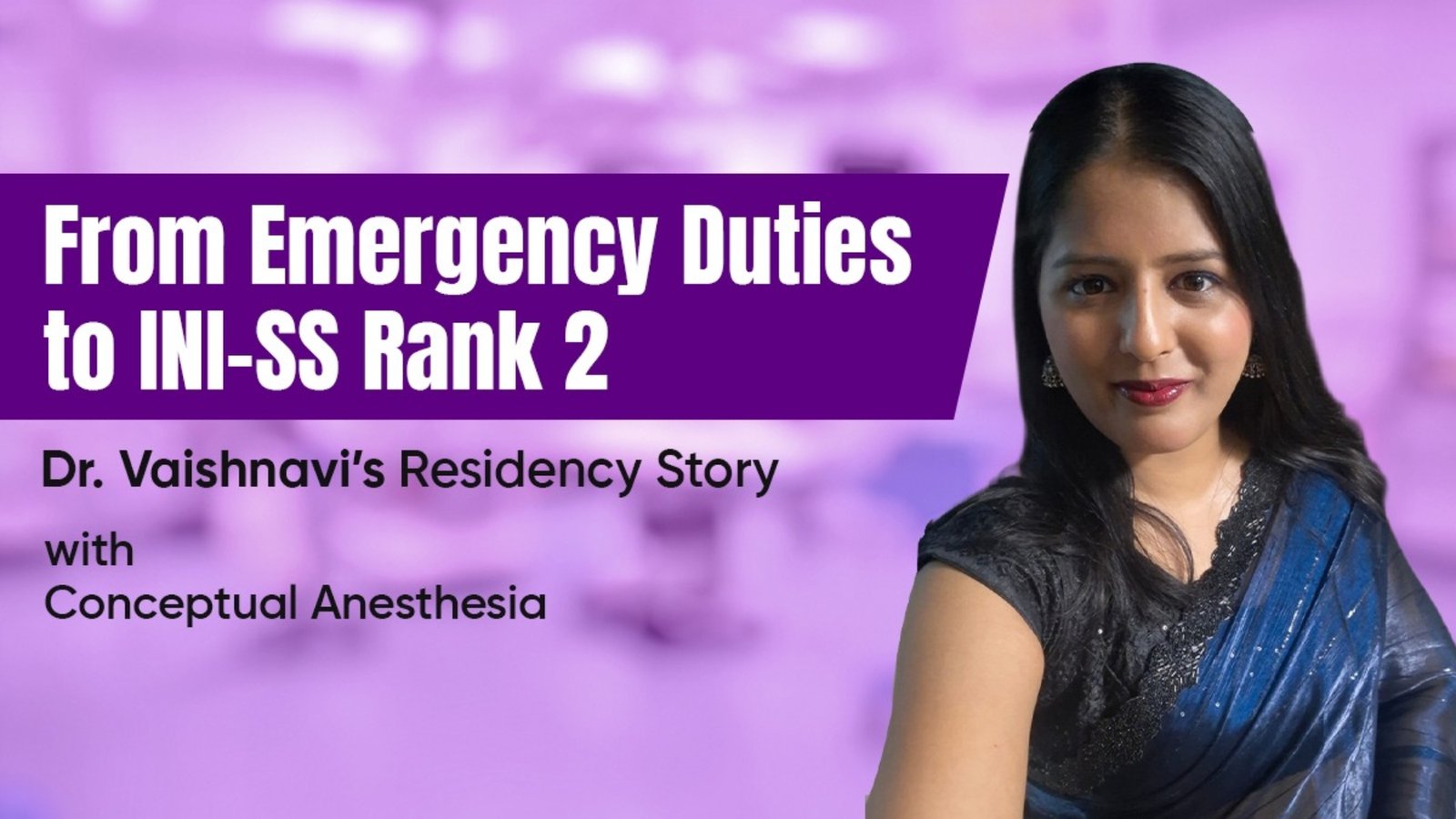
From Emergency Duties to INI-SS Rank 2: Dr. Vaishnavi’s Residency Story with Conceptual Anesthesia 

Estimated reading time: 5 minutes

As we al know that  anesthesia residency is not easy. Long OT hours. Night duties. Back-to-back emergencies. PAC clinics. Endless fatigue. 

Most residents barely get time to sleep, let alone prepare for entrance exams. And yet, Dr. Vaishnavi managed to do something truly extraordinary, she secured Rank 2 in the INI-SS Oncoanesthesia exam while completing her MD anesthesia residency. 

Her journey is not about shortcuts. 
It’s about smart learning, discipline, and having the right guidance at the right time — through Conceptual Anesthesia. 

Life at GSVM: Where Residency Is Truly Hectic 

Dr. Vaishnavi completed her MD Anesthesia from GSVM Medical College, Kanpur (2022–2025 batch) — a hospital known for its heavy patient load and nonstop emergencies. 

“We used to get two to three emergency duties every week. That was normal for us from first year to third year.” 

Like most residents, her focus was not on cracking super speciality exams at first. Her only goal was to survive residency with confidence. 

She wanted to: 

  • Manage cases properly 
  • Answer seniors in the OT 
  • Understand anesthesia, not just memorize it 

And that’s when she discovered Conceptual Anesthesia. 

Finding Conceptual Anesthesia at the Right Moment 

In August 2023, just before starting her second year, Dr. Vaishnavi came across Conceptual Anesthesia on Instagram. 

She was exhausted. 
She barely had time. 
Textbooks felt impossible to read. 

So she started with small steps. 

“I began with basic videos like pharmacology and spinal anesthesia. These are the things juniors are constantly asked in OT.” 

She wasn’t thinking about SS exams yet. 
She was thinking about becoming a better resident. 

Studying Around OT Cases – Not Against Them 

Her study style was simple and practical. 

If a TURP case was posted for the next day → she watched spinal anesthesia 
If she was posted in gyne OT → she watched gyne anesthesia videos 
If in general surgery → she revised laparoscopy anesthesia 
Emergency duty → 1–2 videos whenever she got time 

“We get PAC one day before and cases are listed in the evening. I used to watch the relevant video for the next day’s OT.” 

This way, her learning was directly connected to real patients. 
No overload. No panic. Just focused learning. 

Why Conceptual Anesthesia Fit Perfectly into Residency Life?

During residency, reading textbooks line by line is honestly impossible. 

“We simply don’t get that kind of time. Videos and PDFs are much easier to manage between duties.” 

Conceptual Anesthesia became her daily companion: 

  • Quick videos between cases 
  • PDFs for revision 
  • Instrument and pharmacology notes for spotters 
  • Long and short case books for exams 

Everything was crisp, clear, and straight to the point. 

Cracking INI-SS in Just 10–12 Days 

Her INI-SS exam happened between her MD exams and results. She barely had 10–12 days after finishing duty. 

So she planned smartly. 

She focused on: 

  • General anesthesia basics 
  • Tube sizes, purity, equipment 
  • High-yield PDFs 
  • Core concepts 

“If we miss general anesthesia, we won’t even qualify the first round.” 

Despite having limited oncoanesthesia exposure in her institute, the oncoanesthesia lectures on the Conceptual Anesthesia app helped her build confidence. 

And the result? 

✨ INI-SS Rank 2 ✨ 

The Books That Made Revision Easy 

Conceptual Anesthesia’s revision books played a huge role: 

  • Long question book 
  • Long & short cases 
  • Pharmacology PDF 
  • Instrument PDF 

“Students usually ignore instruments, but 2–3 spotter questions come from there. These books helped me revise quickly.” 

They were short, clear, and perfect for last-minute revision. 

Her Message to Junior Residents 

Dr. Vaishnavi keeps it real: 

“First focus should be on residency. Understand your cases. We are doing anesthesia to save lives, not just to crack exams.” 

She believes Conceptual Anesthesia should be used to: 

  • Understand monitoring 
  • Learn fluid calculations 
  • Handle instruments confidently 
  • Manage OT cases properly 

When your concepts are strong, your ranks will automatically follow. 

Conclusion: A Journey Every Resident Can Relate To 

Dr. Vaishnavi’s story is not about studying 12 hours a day.  It’s about using the right platform in the right way. 

Conceptual Anesthesia helped her: 

  •  Learn alongside real OT cases 
  • Build strong fundamentals 
  • Revise quickly during duty breaks 
  •  Prepare smartly for exams 
  • Grow into a confident anesthetist 

From emergency duties to INI-SS Rank 2, her journey proves that smart learning beats long hours. 

If you’re an anesthesia resident trying to balance OT life and academics then  Conceptual Anesthesia can be your strongest support system. 

Share

Anesthesia Residents

Confused About Choosing Anesthesia as Your Branch? Here’s a Guide

Estimated reading time: 4 minutes

If you’re in the middle of NEET PG counselling and staring at “MD/DNB Anesthesia” on your screen, it’s very normal to hesitate.

  • Is it a good branch?
  • Is MD better than DNB? What about DA?
  • What can I do after anesthesia—critical care, abroad, freelancing?

This blog takes you through anesthesia as a career—from the day you join residency to the day you retire, including critical care as a subspecialty. Think of it as the honest senior you wish you had on call right now.

1. MD vs DNB vs DA – Does the Degree Really Matter?

Once you get your NEET PG rank and decide on anesthesia, these are your main academic options:

  • MD Anesthesia
  • DNB Anesthesia
  • DA (Diploma in Anesthesia) – now gradually being phased out in many places

The first doubt everyone has:

“If I don’t do MD, will it ruin my career?”

In anesthesia, your skill depends far more on exposure than on the letters after your name.

What actually matters?

Wherever you train—MD or DNB—check:

  1. Patient inflow:
    Busy hospital, full OT lists, emergency load.
  2. Variety of surgeries:
    • General surgery
    • Ortho
    • Obs-Gyn
    • Uro, Onco, etc.
  3. Super-speciality OTs:
    • Neurosurgery
    • Cardiac
    • Pediatric
    • Robotic surgery, etc.

If you’re regularly doing spinals, epidurals, blocks (landmark & ultrasound-guided), intubations, managing sick patients and complex OT lists, you’ll come out confident—whether it was MD or DNB.

Many DNB residents from high-volume corporate or big city hospitals are often more hands-on than MD residents from smaller places with low caseload. So don’t worship the degree; evaluate the institute and workload.

Where does DA fit in?

DA is a diploma, and in most branches, diplomas are being phased out. If you’re forced to choose DA because you’re not getting MD/DNB:

  • Prefer DA + Secondary DNB
    → This combination is considered equivalent to MD in the job market.
  • DA alone will restrict you in the long run, especially for corporate jobs or teaching posts.
Bond vs No Bond

This changes state-wise and institute-wise, but broadly:

  • MD (Government colleges): Usually has a PG bond (often 1–2 years, varies by state).
  • DNB (Private/Corporate hospitals): Often no bond, which is a big plus—you can move on to SRship or private jobs earlier.
  • DA: Usually comes with a state-defined bond. Secondary DNB typically does not have a bond.
After Residency: What Are Your Career Options?

Once you finish MD/DNB (and bond, if any), you stand at a huge crossroads. Some options:

1. Complete Your Bond

If you have a bond in a government hospital:

  • You now work with more responsibility, more independence, and more complex cases.
  • It’s a good phase to mature as an independent anesthetist.
2. SRship (Senior Residency)

If you don’t have a bond (often with DNB), a Senior Resident (SR) job is highly recommended.

Strategic tip:
Choose an SRship in a hospital that fills the gaps of your residency.

Example:

  • If your residency was heavy on GA and onco cases, but weak in regional anesthesia and ortho →
    Choose an SRship where you’ll get:
    • Spinals, epidurals, nerve blocks
    • Peripheral blocks, regional techniques

You can genuinely “patch” your weaknesses in SRship.

3. Freelancing

You can also jump straight into freelancing:

  • Buy basic equipment (laryngoscopes, tubes, drugs, etc.)
  • Network with surgeons and smaller centres
  • Start getting calls for elective and emergency cases

Your degree (MD/DNB) is enough to start; your skills and reliability determine how much work you get.

Is Anesthesia the Right Branch for You?

Choose anesthesia if:

  • You love physiology, pharmacology, and acute care
  • You’re okay being the quiet backbone rather than the poster face
  • You stay reasonably calm in crises
  • You value flexibility, a decent income, and the ability to adjust work around your life
  • You’re okay with some nights, emergencies, and high-pressure moments
  • You like the idea of multiple future pathways:
    • OT practice
    • Freelancing
    • Critical care
    • Pain
    • Onco, neuro, cardiac, pediatric, and obstetric anesthesia
    • India or abroad

I you are thinking of choosing anestheisa for superspeciality, don’t let myths scare you away. It’s a powerful, versatile branch with solid career security, flexible lifestyles, and deeply satisfying clinical work—even if you’re not always the one getting selfies and flowers from patients.

Share

NEET SS Exam

NEET SS Exam: Why NEET SS Aspirants Prefer Conceptual Anesthesia for Their Final Prep

Estimated reading time: 3 minutes

As NEET SS gets closer, most anesthesia residents are rushing to revise the important topics, sort out their weak areas, and find a clear way to finish the syllabus on time. At this stage, what you need is not more material but a platform that gives direction.
This is why many students lean toward Conceptual Anesthesia in the last stretch. It keeps things organised and helps you understand what really matters for the exam.

What Makes Conceptual Anesthesia a Strong Choice?

One thing most students appreciate is that the platform explains things in a simple, practical manner. Nothing feels rushed or overly complicated, which makes revision easier.

  1. Clinical Demonstrations That Build Real Understanding
  • Instead of only reading theory, you get to see how concepts look in clinical settings. These demonstrations help you connect what you study with what you will actually face in the exam or in the OT.
  1. Theory Notes That Are Easy to Revise
  • The notes are clear and exam-focused. You don’t have to spend hours collecting PDFs or searching for explanations. Everything you need is kept in one place, which saves a lot of time.
  1. DNB OSCE Sessions That Remove the Fear Factor
  • OSCE is one area where many students struggle because they rarely get structured practice.
  • Conceptual Anesthesia walks you through stations, equipment, drugs, and common exam patterns so that you feel more prepared and less anxious.
  1. Hardcopy Books That Help You Stay Consistent
  • Students like having physical books because they are easier to revise repeatedly.
  • The Conceptual Anesthesia book set covers high-yield theory, updated guidelines, and quick revision points that are helpful in the final weeks.
  1. Live Sessions With Senior Faculty
  • The live discussions are one of the strongest parts of the platform. Teachers pick important and tricky topics, discuss real cases, and guide you on areas students usually make mistakes in.
Everything You Need for NEET SS in One Place

You get:

  • Solved question papers
  • SS-oriented MCQ discussions
  • A proper question bank to practise
  • Quick revision pearls
  • Guidance on high-yield topics
  • Books + clinical demos + theory notes + OSCE content

This removes the confusion of switching between multiple sources and gives you a straightforward plan to follow.

Why It Works Well for Last-Month Preparation?

At this stage, what you really need is clarity. Conceptual Anesthesia gives you a neat structure, reliable content, and regular guidance so you don’t feel lost. It helps you revise faster, remember better, and stay confident for the exam.

If you want, I can also write a shorter marketing version, a mailer, or a social media caption based on this.

Share

Anesthesia Residents

6 High-Yield ICU Endocrine Emergencies Every Resident Must Master

Estimated reading time: 5 minutes

Endocrine emergencies form a critical subset of ICU medicine where minutes matter and sequence saves lives. Subtle endocrine physiology, when pushed into crisis by infection, medications, or metabolic stress, can result in life-threatening shock, arrhythmias, coma, and multiorgan dysfunction.

This blog breaks down six classic case vignettes that frequently feature in exams and real-world practice. Each section includes the correct answer, pathophysiological rationale, stepwise management, and practical pearls.

Myxedema Coma – Why Steroids Come Before Thyroid Hormone
Case Summary

A 72-year-old woman with long-standing untreated hypothyroidism is found unresponsive in winter. Severe hypothermia (32°C), bradycardia, hypotension, puffy skin, delayed reflexes, hyponatremia, hypoglycemia, and low-voltage ECG complexes point to myxedema coma.

Most Appropriate Immediate Step – IV Hydrocortisone Before Thyroid Hormone

Correct option: B. IV hydrocortisone before thyroid replacement

Why?

Myxedema coma represents profound decompensated hypothyroidism, causing:

  • Depressed myocardial function
  • Hypoventilation
  • Severe metabolic slowing
  • Hyponatremia
  • Hypoglycemia
  • Altered mental status

Significantly, adrenal insufficiency frequently co-exists, especially in autoimmune thyroid disease. Administering levothyroxine alone accelerates metabolism, which can unmask or worsen adrenal failure, precipitating adrenal crisis.

Thyroid Storm – The Correct Sequence is Life-Saving
Case Summary

A 36-year-old woman with untreated Graves’ disease presents with agitation, fever (40.2°C), vomiting, atrial fibrillation, and delirium, a classic thyroid storm.

Which Step Must Precede Iodine? – PTU First, Then Iodine

Correct option: B. Administer iodine solution 1 hour after PTU

Why This Order?

This sequence prevents the Jod–Basedow effect, where early administration of iodine actually increases new hormone synthesis if the thyroid gland is not blocked.

Stepwise Treatment Sequence
  1. Beta-blocker – propranolol controls adrenergic symptoms + reduces T4→T3 conversion
  2. PTU (or methimazole) – blocks hormone synthesis; PTU also blocks peripheral conversion
  3. Iodine (Lugol’s iodine/SSKI) – 1 hour AFTER PTU – blocks hormone release
  4. Steroids (hydrocortisone) – adrenal support + inhibits deiodinase
  5. Treat the precipitating cause – infection, surgery, drug withdrawal
Clinical Pearl

Never give iodine before antithyroid drugs in thyroid storm.
Reversing the order can dangerously worsen hormone release.

Adrenal Crisis in Refractory Septic Shock – Do Not Wait for Tests
Case Summary

A 48-year-old man on chronic prednisone for rheumatoid arthritis presents with pneumonia and septic shock. Despite fluids and high-dose norepinephrine, MAP remains 55 mmHg. Cortisol is 7 µg/dL.

Next Best Step – Give IV Hydrocortisone Immediately

Correct option: B. IV hydrocortisone 100 mg STAT

Reasoning

Long-term glucocorticoid therapy suppresses the HPA axis. During severe infection or shock, endogenous cortisol is required to maintain:

  • Vascular tone
  • Catecholamine responsiveness
  • Stress response

Low cortisol worsens shock.

Waiting for ACTH stimulation testing is dangerous and unnecessary.

Clinical Pearl

Never delay steroids in a shock that is unresponsive to fluids and vasopressors.
In an adrenal crisis, treatment is diagnostic.

Diabetic Ketoacidosis (DKA) – Fluids First, Always
Case Summary

A 22-year-old woman with type 1 diabetes presents with severe DKA: pH 6.9, bicarbonate 4 mmol/L, glucose 550 mg/dL, dehydration, Kussmaul breathing, and hypotension.

Primary First Intervention – 1 L Isotonic Saline Bolus

Correct option: B. 1 L isotonic saline

Why?

DKA is fundamentally a volume-depletion crisis due to osmotic diuresis. Restoring perfusion:

  • Begins clearing glucose and ketones
  • Improves tissue perfusion
  • Reduces counter-regulatory hormones
  • Stabilizes the cardiovascular system

Insulin before fluid restoration may worsen hypotension or shock.

Management Flow
  1. 1 L Normal Saline (15–30 minutes)
  2. Start IV insulin infusion (0.1 U/kg/hr) only after initial fluids
  3. Check potassium before insulin
  4. Add bicarbonate only if pH < 6.9 with cardiovascular compromise
Clinical Pearl

In DKA, fluid therapy corrects glucose faster than insulin during the initial hour.

Hyperosmolar Hyperglycemic State (HHS) – Slow and Controlled Rehydration
Case Summary

A 68-year-old diabetic presents with glucose 850 mg/dL, Na 150 mmol/L, osmolality 345 mOsm/kg, but no ketoacidosis. This is classic HHS.

Most Important Therapeutic Principle – Slow Rehydration

Correct option: B. Gradual rehydration with isotonic saline

Why?

HHS features extreme hyperosmolarity with fluid deficits up to 10 liters.
Rapid shifts cause cerebral edema, which is the leading cause of mortality.

Management
  1. Start with isotonic saline to restore perfusion
  2. Then transition to 0.45% saline based on corrected sodium/osmolality
  3. Glucose reduction target: 50–75 mg/dL per hour
  4. Begin insulin only after adequate fluids
  5. Treat precipitating events (stroke, MI, infection)
Clinical Pearl

In HHS, the danger is rapid correction, not hyperglycemia itself.
Go slow.

Hypoglycemia in Sedated ICU Patients – The Earliest Indicator
Case Summary

A 45-year-old man in the ICU on sedation, mechanical ventilation, and insulin infusion develops hypotension and non-reactive pupils. Glucose is 28 mg/dL.

Earliest Reliable Indicator? – Drop in EEG Activity

Correct option: C. Sudden fall in EEG activity

Why?

Autonomic symptoms, diaphoresis, tachycardia, and tremors are often:

  • Masked by sedation
  • Blocked by beta-blockers
  • Obscured by paralytics
  • Impossible to observe on mechanical ventilation

Cerebral neurons, however, respond quickly to hypoglycemia.

Clinical Pearl

In deeply sedated or ventilated patients, neurological or EEG changes are the earliest sign of hypoglycemia.

Conclusion

Endocrine emergencies demand fast recognition and correct sequencing of treatment. Whether it’s giving steroids before thyroid hormone in myxedema coma, PTU before iodine in thyroid storm, fluids before insulin in DKA, or slow hydration in HHS, survival depends on doing the right step at the right time. With clear understanding and timely action, these life-threatening crises become highly reversible and manageable in the ICU.

Share

Dr. Thallapalem Chaithanya

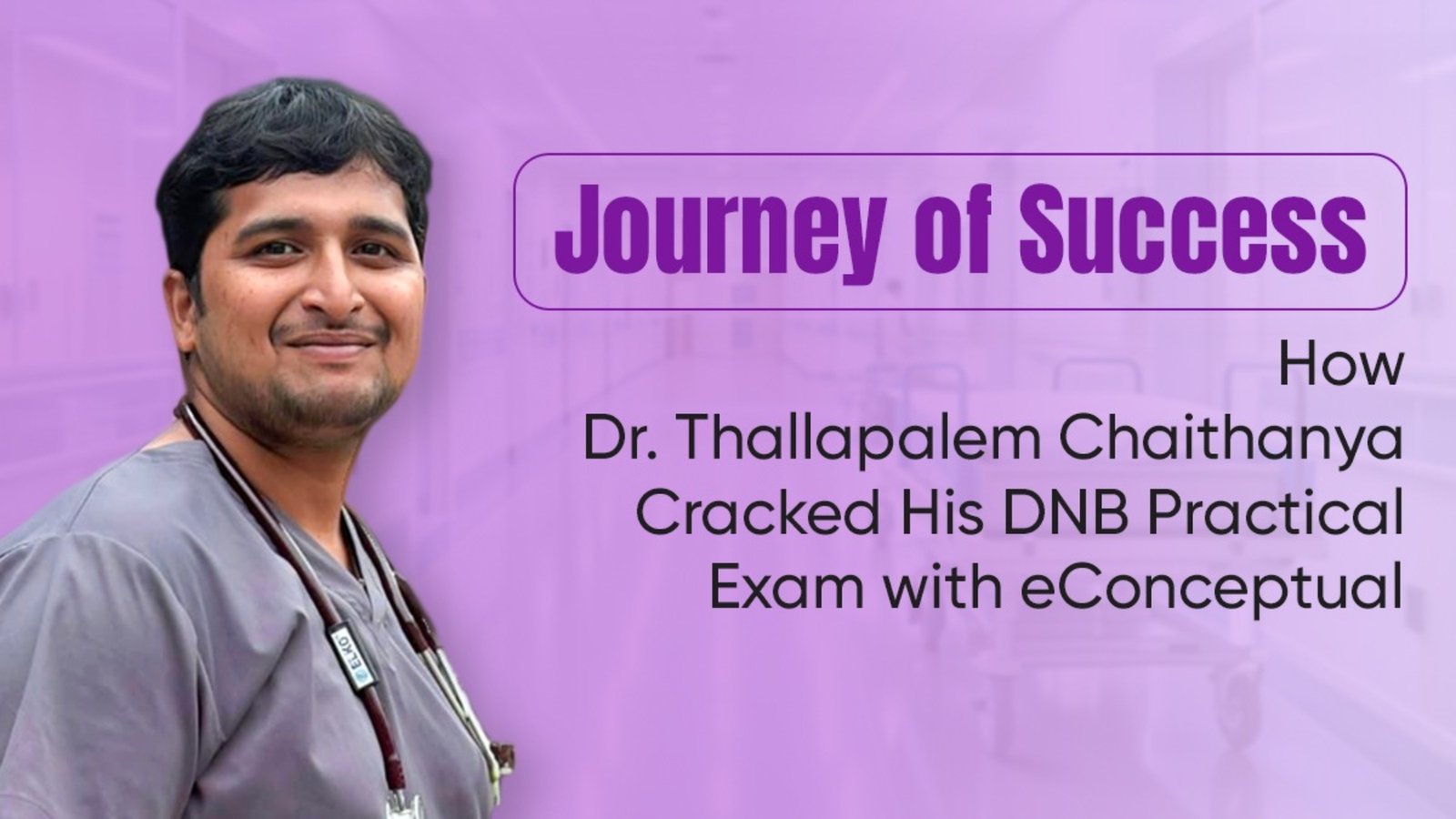
Journey of Success: How Dr. Thallapalem Chaithanya Cracked His DNB Practical Exam with eConceptual

Estimated reading time: 7 minutes

In a soulful discussion filled with gratitude, humility, and inspiration, Dr. Thallapalem Chaithanya shared his wholesome journey of preparing for and passing the DNB Anesthesia practical examination with an excellent score.
His ultimate success story not only highlights his pure dedication but also exhibits how eConceptual created such a structured learning approach that helped him turn anxiety into achievement.

Meeting His Mentor

“He said, It’s a pleasure to meet you, ma’am. You are one of my idols. Your wonderful teaching style feels like storytelling; the way you explain things makes us think, imagine, and understand medicine creatively.”

Those were the first words Dr. Thallapalem Chaithanya shared with Dr. Jhanvi Bajaj, while expressing his commendation for her teaching ways that perfectly merge with clarity and curiosity. His curiosity and excitement were very obvious; after all, meeting one’s mentor after achieving success is always an emotional milestone.

Although Dr. Jhanvi Bajaj heartily congratulated him, while also acknowledged that clearing the DNB practicals is not that easy to clear. The discussion that followed was a deep and perspective discussion about all the preparation strategies, useful resources, and lessons for future aspirants.

The Preparation Strategy

When she asked about how he prepared for the practicals, Dr. Thallapalem Chaithanya shared his perfectly structured plan:

“His clear-cut words were,” The only resource I used was eConceptual, along with the Tata Memorial book, and nothing else.”

Overall, after receiving his DNB theory results on August 15th, he found that the practical exam date was scheduled for September 3rd. Later, his batch was shifted to September 23rd, giving him extra time, which he utilised fully.

“He said, I started by watching all OSCE videos on the app and completed 70% of case discussions, which was really helpful. I also revised videos on JVP, pulse, and blood pressure, the basics that sometimes come up unexpectedly in exams.”

He used to revisit videos multiple times because it helps to improve his conceptual clarity and confidence, especially during the final week before the exam.

His Key Strategies That Made the Difference:
  • He used to go through with eConceptual’s Case Discussion videos and PYQs, which helped him to understand the real-life anesthesia cases and examiner expectations.
  • He depends upon the core anesthesia textbooks just to strengthen the conceptual foundations and communicate theory with eConceptual’s video learning.
  • He slightly maintained a perfect balance between theory and practical preparation, which ensures that both exam performance and clinical reasoning skills are improved.
  • He managed his valuable time in revision productively and prioritised the repeated review of important topics before the final exam.
The Power of eConceptual’s Learning Ecosystem

Dr. Thallapalem Chaithanya later discovered the eConceptual a year before his exam through Instagram. The app’s interactive interface and comprehensive study resources caught his attention immediately, so he decided to go with it in further studies.

“The most appreciable feature of eConceptual is its books, the Master Solutions series. I used only these for theory and scored 245 out of 400. The explanations are generally reflected with images and color-coded layouts that make the learning process efficient and memorable for me.”

He foregrounded that reading from Master Solutions twice can directly help him cover approximately 80% of his actual exam questions. The visual diagrams and simple flowcharts allowed him to reproduce answers confidently and understand the part perfectly during the written and oral exams.

Download the official Conceptual Anesthesia App now to explore the same resources that helped Dr. Chaithanya achieve his dream!

Practical Exam Experience

Recalling his practical experience, Dr. Chaithanya mentioned two long cases:

  • Chronic Liver Disease with Diabetes Mellitus for lower limb debridement
  • 80-year-old male for Total Knee Replacement (TKR)

Examiners focused on basic concepts like the dose of buprenorphine and differences between hyperbaric and isobaric drugs. The eConceptual videos prepared me for exactly these kinds of questions.”

He also attended the ISA Target Conference in Hyderabad, where real-time case discussions and viva simulations refined his clinical reasoning.

“The conference taught me one thing: never stay silent. Examiners don’t want to fail you; they just want to see your thought process.”

From Nervous to Confident

When asked if he was nervous before the exam, he smiled:

“No ma’am, I felt confident because I had used the extra time wisely. eConceptual’s videos and books gave me both conceptual clarity and mental calmness.”

He shared how watching even the basic MBBS-level videos helped him prepare for unexpected questions, a reminder that in medicine, fundamentals always matter.

Suggestions for Improvement

Dr. Thallapalem Chaithanya had thoughtful feedback for the eConceptual team:

“It would be great to have a book for OSCEs, since many of us are new to that format. A written guide, along with the videos, will be revised faster.”

He also appreciated the recent updates in the app, including the new drug summaries and simplified simulation diagrams in Master Solutions.

“The diagrams make it easier to remember and revise. It’s almost like visual memory training.”

Words of Gratitude

Throughout the conversation, Dr. Chaithanya’s humility stood out. He thanked his faculty, colleagues, and family, especially his wife, an OBGYN resident who also scored remarkably in her exams.

“My wife stood by me through everything, taking care of our baby while I studied. My parents and in-laws also supported me immensely. Having such a support system made all the difference.”

He also expressed heartfelt gratitude toward his fellow department and mentors for providing a favourable environment to study and grow.

His Thoughts on eConceptual Faculty

In a touching moment, he acknowledged the legendary faculty who made his journey special:

“Dr. Gobind Rai Garg Sir’s pharmacology classes, Dr. Gurushanthi Ma’am’s detailed case discussions, Dr. Gargi Deshpande Ma’am’s cardiac anesthesia sessions, and Dr. Saurabh Dhananjay Sir’s lectures on TBI, each of them helped me at different stages.”

He added that eConceptual’s collaboration-based learning allowed him to prepare seminars and presentations during residency seamlessly.

“Whenever I had to give a seminar, I just searched the topic on my Conceptual Anesthesia app, watched the video, and used the notes. It made my presentations much stronger.”

Message to Juniors

His advice to upcoming residents is simple yet powerful:

“Even if you have a month before exams, start using eConceptual. The combination of books, videos, and updates gives complete coverage.”

He believes printable books with visuals and structure are rare assets in digital learning, and that’s where eConceptual stands apart.

Looking Ahead

Before wrapping up, he requested that Dr. Jhanvi Bajaj make a special video for post-residency guidance for future doctors. So they can also cover fellowships, shadowing, and academic pathways. She promised him that we are already working on such content, including the Super Speciality (SS) Recall Question Bank with video explanations.

Final Thoughts

Dr. Thallapalem Chaithanya’s professional journey demonstrates that success in medicine stems from a combination of compatible conceptual learning, disciplined revision, and the right guidance. With the conceptual anesthesia app’s well-organized resources and expert mentorship, he transformed exam stress into achievement.

Watch the full official interview of Dr. Thallapalem Chaithanya and Dr. Jhanvi Bajaj, a must-watch for every anesthesia resident preparing for DNB or MD practicals.

Click here to watch the interview

Share

Dr. Kishore Mangal

Hemolytic Anemia Explained by Dr. Kishore Mangal

Estimated reading time: 3 minutes

Hemolytic anemia happens when red blood cells are destroyed faster than the body can replace them. It is often seen in ICU patients, but it can occur in many other situations. Knowing what causes it, how it presents, and how to manage it is important, both in exams and in clinical practice.

Causes You Should Know
Hemolytic anaemia can arise due to several factors:
  • Autoimmune conditions: Warm or cold autoimmune hemolytic anaemia.
  • Medications: Drugs like 5-FU, methyl dopa, quinine, dicloquinac, penicillins (especially piperacillin), and cephalosporins.
  • Infections: Malaria, viral hepatitis, Epstein-Barr virus, or septic shock.
  • Transfusion reactions: Sometimes anemia appears after a blood transfusion.
  • Medical devices: Patients on ECMO, Impella, or other extracorporeal devices can develop hemolysis.
  • Underlying conditions: SLE, L-syndrome, G6PD deficiency.
  • Toxins and bone marrow suppression: Certain chemicals or marrow problems can trigger it.

Exam tip: A patient’s history often gives the clue. Look for recent blood transfusions, new drugs, fever, or travel history.

Click Here to Watch: Understand Hemolytic Anemia by Dr. Kishore Mangal

Clinical Signs to Watch
Physical examination and history are very helpful:
  • Jaundice: Most patients show unconjugated hyperbilirubinemia.
  • Urine color: Dark urine suggests conjugated bilirubin. Pale urine usually indicates unconjugated bilirubin.
  • Extravascular hemolysis signs: You may notice splenomegaly.
  • Vascular complications: Seen in conditions like sickle cell anemia.

History points to consider:

  • G6PD deficiency: Triggers include surgery, infection, or certain oxidant drugs.
  • Weight loss or night sweats: Could indicate hematological malignancy.
  • Joint pain: May suggest autoimmune disease such as SLE.
Lab Clues

Certain lab tests can help confirm hemolysis:

  • Peripheral blood smear:
    • Schistocytes indicate microangiopathic hemolytic anemia (like TTP, HUS, or DIC).
    • Microspherocytes are typical of autoimmune hemolytic anemia.
    • Sickled cells appear in sickle cell disease.
    • Bite cells suggest G6PD deficiency.
    • Target cells and basophilic stippling indicate thalassemia or alcohol abuse.
    • Ringed sideroblasts can be seen in congenital disorders or myelodysplastic syndromes.
  • Other lab markers:
    • Reticulocyte count is usually high—showing active marrow response.
    • LDH is often elevated.
    • Haptoglobin is low in hemolysis.
    • Direct Coombs test helps differentiate warm vs. cold hemolytic anemia.
Warm vs. Cold Hemolysis
  • Warm hemolysis: IgG antibodies attack RBCs at body temperature. Causes include idiopathic autoimmune anemia, infections, certain drugs, lymphoproliferative disorders, and SLE.
  • Cold hemolysis: IgM antibodies act at cooler temperatures. Often post-infectious, like EBV or influenza, or paroxysmal cold hemoglobinuria.
Management
Treatment depends on type and severity:
  • Acute hemolysis: Plasmapheresis may be necessary in emergencies.
  • Warm hemolysis: Steroids are first-line. Refractory cases may need splenectomy or immunosuppressants. Rituximab is also useful. IVIG has a limited but occasional benefit.
  • Cold hemolysis: Avoid cold exposure. Severe cases may require plasmapheresis. Rituximab can help if the problem persists.
Intravascular vs. Extravascular Hemolysis
  • Intravascular: RBCs are destroyed in circulation. Labs show free hemoglobin in plasma or urine, very low haptoglobin, high LDH, and abnormal RBC shapes.
  • Extravascular: RBCs are destroyed in the liver and spleen. Less free hemoglobin is released, LDH is mildly elevated, and blood smears may show fewer abnormalities.
Takeaway

Hemolytic anemia has many faces, from autoimmune causes to infections, drugs, and genetic conditions. Careful history, thorough examination, and targeted lab tests are key. Knowing the differences between warm and cold hemolysis, as well as intravascular vs. extravascular destruction, guides treatment and improves patient outcomes.

Share

Anesthesia Residency

Understanding Regional Anesthesia in Clinical Practice: A Journey Through Key Nerve Blocks

Estimated reading time: 5 minutes

When any resident enters modern anesthesia, local approaches have transformed how we manage pain before, during, and after surgery. Instead of depending upon systemic medications, these unified techniques allow all the anesthesiologists to target all the specific nerves, which include reducing pain and enhancing recovery. Let’s walk through some essential nerve blocks, their mechanisms, and clinical applications in a very clear form, as it will be easy to follow. 

The Erector Spinae Plane Block: A Rising Star in Thoracic Surgery

Have you ever imagined a patient has been undergoing thoracic surgery for a lobectomy? Basically, the anesthesiologists depend upon the thoracic epidurals or paravertebral nerve blocks, which help to control pain. While epidurals are familiar and widely practiced, they often deal with challenges like they have to suffer from technical difficulty, risks of hypotension, and sometimes they have limited postoperative use.

This is where the Erector Spinae Plane (ESP) block shines. That is usually performed under ultrasound guidance, as it is kind of simple and safe, which helps to make it increasingly popular.

Anatomy in Action

The erector spinae group consists of three muscles, spinalis, longissimus, and iliocostalis, running parallel to the spine, anchored over the transverse processes of the vertebrae. From superficial to deep, these muscles are covered by the trapezius and rhomboid, before resting directly over the transverse process.

During an ESP block:
  • The ultrasound probe is placed longitudinally, just parallel to the spine.
  • The three muscle layers (trapezius, rhomboid, erector spinae) are visualized clearly.
  • A needle is advanced until it touches the transverse process.
  • About 20 ml of local anesthetic, like bupivacaine (0.125–0.25%) or ropivacaine (0.2%), is deposited beneath the erector spinae muscle.

As the drug spreads, it lifts the muscle off the transverse process, creating a visible “plane.” This diffusion blocks the dorsal rami, providing pain relief for 2–3 dermatomal levels. With some spread, even ventral rami and intercostal nerves can be affected, extending analgesia to the anterolateral chest wall.

Clinical Use

The ESP block is excellent for:

  • Thoracic surgeries
  • Spine surgeries
  • Rib fractures
  • Some breast surgeries (though paravertebral blocks remain superior for mastectomies)

Its mechanism? Diffusion of the anesthetic into the paravertebral and epidural spaces, covering both dorsal and ventral rami. Simple, elegant, and effective.

The Greater Occipital Nerve Block: Relieving Headaches

Headaches can be tiring, especially when it is linked to subcortical neuralgia or a person who has

 migraine syndromes. So now, here is the Greater Occipital Nerve Block (GONB) provides targeted relief.

Finding the Right Spot

It is necessary to find the right spot, so the greater occipital nerve runs close to the occipital artery, which makes the landmarks essential:

  • Occipital protuberance, there is a prominent bump at the back of the head)
  • The mastoid process is basically behind the ear bone.

Draw a line between the two, and at about one-third from the occipital protuberance, you’ll find the injection point. Alternatively, you can palpate the occipital artery and inject just medial to it.

Another quick trick? Go 2 cm inferior and 2 cm lateral to the occipital protuberance.

Only a small volume, 2–3 ml of local anesthetic (often 0.25% bupivacaine with dexamethasone), is required.

Indications
  • Migraine
  • Cluster headaches
  • Cervicogenic headaches
  • Post-dural puncture headaches

By blocking the greater occipital nerve, patients often experience remarkable relief, making this a simple but powerful tool.

Trigeminal Ganglion Radiofrequency Ablation: Pain Relief with Risks

For patients with long-standing trigeminal neuralgia unresponsive to medications, radiofrequency ablation of the trigeminal ganglion is considered. But, like all procedures, it carries potential complications.

The trigeminal ganglion gives rise to three divisions:
  • V1 (ophthalmic) – sensory to forehead, scalp, upper eyelid, cornea, and tip of the nose
  • V2 (maxillary) – sensory to cheeks, upper lip, and lower eyelid
  • V3 (mandibular) – sensory to the jaw + motor to muscles of mastication

If V1 is affected, complications include corneal anesthesia, which risks eye injury due to loss of protective sensation. Patients may also experience dysesthesia—an unpleasant burning or tingling sensation.

Thus, while effective for pain, this procedure demands precision and careful patient selection.

Interscalene Brachial Plexus Block: A Double-Edged Sword

Moving from the head and spine to the shoulder—consider a patient scheduled for elective orthopedic surgery. The interscalene block, performed under ultrasound, is a trusted method for shoulder analgesia.

Anatomy Snapshot
  • The brachial plexus roots (C5, C6, C7) sit in the interscalene groove between the anterior scalene (medial) and middle scalene (lateral).
  • A needle is introduced laterally to medially, and local anesthetic is deposited in the groove.
The Catch

Right above the anterior scalene lies the phrenic nerve, which powers the diaphragm. There the large drug volumes (e.g, 15 ml), local anesthetics can spread and block the phrenic nerve, which leads to hemidiaphragmatic paralysis.

You know what, the most healthy patients tolerate this issue well, but those who have compromised lung function may develop respiratory distress.

This is why modern practice favors:

  • Lower drug volumes (~10 ml)
  • Precise ultrasound guidance
  • A lateral-to-medial approach to minimize phrenic involvement
Conclusion

Regional anesthesia is all about exactness, safety, and patient comfort. For patients ESP block has now become the simplest yet powerful option for thoracic and spine surgeries. The GONB offers very quick relief for headaches, while trigeminal ganglion procedures target stubborn neuralgia with some sensory risks. The interscalene block remains excellent for shoulder surgeries but requires care to avoid phrenic nerve paralysis.

In essence, each block has its place; when chosen wisely, these techniques not only control pain but also speed recovery and improve overall surgical outcomes.

Share

Anesthesia Residency

First-Year MD/DNB Anesthesia Residency: Skills, Strategies, and Success Tips

Estimated reading time: 4 minutes

You have entered anesthesia residency, which is a crucial journey that combines science, exactness, and the courage to make life-saving decisions. 

Your first year is an intense phase where the learning curve teaches you not only the technical aspects of anesthesia but also develops the judgment and confidence needed to function in pressurized environments. 

Whether you’re in an MD preparation phase or aiming for the DNB examination later, this year makes your foundation for a successful career.

In this guide, we’ll explore the skills to master, strategies to grab, and success tips that will help you during your first year of anesthesia residency programs.

Core Clinical Skills You Must Build Early

Your clinical expertise will be the backbone of your training. As a first-year anesthesia resident, you should focus on mastering these skills:

  • Airway Management – learn from basic mask ventilation to advanced canulation techniques.
  • IV and Arterial Line Insertion – You need to gain information and have confidence in emergencies by practising under supervision.
  • Preoperative evaluation – Learn to assess the patient’s Multimorbidity and risk factors.
  • Mastery in monitoring – Understand every line of ECG, every change in oxygen saturation, and respond appropriately.
  • Crisis Management – Get training in how to deal with situations such as anaphylaxis, hypotension, or cardiac arrest in the OT.

Early proficiency in these areas will not only win the trust of your seniors but also give you an edge in clinical viva during NEET SS preparation and MD exams, or DNB preparation.

Strategies for Efficient Learning

Balancing OT duties, academics, and rest is tricky but achievable with the right approach:

  • Microlearning in breaks – You need to use at least 10–15 minute breaks between cases to review important anesthesia protocols.
  • Give priority to important topics – This is especially true when you are also preparing for the DNB entrance exam in the future.
  • Make OT a classroom – please keep your eyes, mind open and observe drug dosage, patient response, and machine settings during every procedure.
  • Ask questions – Never hesitate to clarify or ask questions with your senior or consultant.
Recommended Resources for First-Year Residents

Although there are many textbooks available on the market, the best books for beginning anesthesia residents are those that have a balance of depth and simplicity. If you want to be exam-ready from day one, be it your MD exam, DNB exam, or SS preparation, it is vital to invest in the right resources.

Conceptual Anesthesia – 7 Book Set for Residents. This book set is specifically designed for anesthesia residents, which includes high-yield concepts, quick revision tools, and in-depth theory to make your preparation more effective and time-saving.

Residency isn’t just about skill; it’s about stamina, adaptability, and mental strength.

A. Time Management
  • Keep a small notebook in your pocket where you can write down your to-dos, case notes, and medication dosages.
  • Get your OT setup ready before the patient arrives.
  • Don’t procrastinate on academic tasks; case logs and thesis writing can quickly pile up.
B. Handling Emergencies
  • Always stay calm, especially during emergencies.
  • Recall your ABCs theory, which is called Airway, Breathing, Circulation.
  • Don’t hesitate to call your senior for help; knowing your limits is a strength.
C. Self-Care
  • Don’t forget to sleep whenever you can, not when you have time.
  • You have to stay hydrated always and snack smartly during long OT lists.
  • Maintain at least 20–30 minutes of physical activity daily to avoid burnout.
Common Challenges and How to Overcome Them
ChallengePractical Solution
Long OT hoursUse standing breaks, keep water nearby
Sleep deprivationPractice power naps, limit caffeine after late evenings
Overwhelm with casesDiscuss with seniors, prioritize learning one skill at a time
Academic backlogSet weekly study targets, integrate with cases seen
Emotional fatigueTalk to co-residents, take short mental breaks
Final Takeaway

First-year anesthesia residency you know a beautiful chaos, which is filled with many sleepless nights, high-pressure scenarios, and small yet satisfying wins. If you focus on central skills, academic learning, and personal well-being, you’ll not only survive but live.

So just stay curious, stay humble to everyone, and always respect the patient’s safety above all.

After all we had discussed above, if you still need structured guidance, case-based learning, and curated study material, explore Conceptual Anesthesia, a platform built to help anesthesia residents master both their clinical and academic journeys.

Share

Anesthesia Residency

Behind the Drapes: The Life of an Anesthesia Resident Unmasked

Estimated reading time: 6 minutes

Anesthesia is one of the most intellectually demanding and emotionally challenging specialties in the field of modern medicine. You know the life of anesthesia residents is quite a complex journey that combines meticulous clinical training, real-time decision-making, academic excellence, and requires a lot of emotional strength. It’s not simple; you can’t just put patients to sleep and expect them to wake up safely, without pain, fear, or complications, is that right? It is more than that, a reality known only to those who undergo anesthesia residency.

In this blog, we will take you into the anesthesia residency experience and highlight the actual growth, the grit, and the goals that define the path of every aspiring anesthesia resident. Whether you’re joining an anesthesia residency or if you are already engaged in the process.

What It Takes to Become an Anesthesia Resident?
Understand the Core of Anesthesia Residency

Anesthesia is a most essential specialty that usually centres around transplantation medicine, pain management, intensive care, and emergency response. An anesthesia residency typically spans almost 3-4 years, which depends on the country, during which residents are trained to several things:

  • Administer general, regional, and local anesthesia.
  • Monitor and manage vital physiological functions during surgeries.
  • Handle post-operative pain and complications.
  • Manage critically ill patients in ICUs.
  • Lead rapid response and code blue teams in emergencies.

This field usually requires exceptional clinical judgment, deep theoretical knowledge and understanding, and calmness under pressure, which makes it one of the most respected yet demanding paths in medicine.

Watch this insightful session on anesthesia learning by Dr. Apurv Mehra: https://www.youtube.com/watch?v=HWvICZAmJfQ

The Journey of Growth: What Anesthesia Residents Learn

From beginner to near-expert, the journey of anesthesia residents is not easy as it involves continuous learning. Here’s a breakdown of what growth looks like during residency:

Year 1 (Junior Resident)
  • Junior residents get a defined orientation to operating room dynamics.
  • They asked to learn some basic pharmacology of anesthesia residents.
  • Airway management (bag-mask ventilation, LMA, intubation).
  • Learn about anesthesia machines and monitors.
  • Observing and assisting in low-risk surgeries.
Year 2 (Intermediate Resident)
  • Residents have to manage patients on their own, but under supervision.
  • They should have mastered regional techniques like spinal and epidural anesthesia.
  • They have often taken rotations in the ICU, pain clinics, and emergency departments.
  • Handling complex comorbid patients.
  • Beginning research and academic presentations.
Year 3-4 (Senior Resident / Registrar)

Supervising junior residents.

  • Senior residents have to lead with critical care teams.
  • Presenting papers at national conferences.
  • Preparing for final examinations and exit interviews.
  • Each year marks an evolution, from learning basics to becoming a leader in the OR.
The Grit Factor: Challenges That Shape the Resident

Anesthesia residency programs are not just about academic success; they test their emotional, physical, and psychological endurance.

Top Challenges Faced:
  • High-pressure environment: You’re the first responder in intraoperative crises. Every second counts.
  • Irregular hours: Anesthesia residents should have to follow night shifts, regularly available on-calls, and long surgeries can affect sleep and social life.
  • Constant vigilance: A minor mistake in game changer for sure, fluid management, or airway intervention can be killing.
  • Emotionally draining: Handling dying patients in ICUs and making immediate life decisions can lead to burnout.
  • Academic load: Regular classes, case presentations, journal clubs, and thesis work demand constant study.

But these different challenges help build strength and determination—qualities that make anesthesia residents calm, focused, and very important in any hospital.

The Goals of an Anesthesia Resident

While each resident’s aspirations may vary, some common professional goals emerge across anesthesia residency programs:

  • Clinical Mastery:

Become an expert in airway management, regional blocks, invasive procedures, and pain management techniques.

  • Research and Academics:

Publish in peer-reviewed journals, present at national/international conferences, or pursue DM/Fellowships in cardiac, pediatric, or neuro-anesthesia.

  • Subspecialization:

Many anesthesiology residents aim for advanced training in Pain Medicine, Critical Care, or Palliative Medicine.

  • Work-Life Balance:

Learning how to manage high-stress work environments while maintaining physical health and mental well-being.

  • Teaching and Mentorship:

Many aspire to become educators, contributing to the training of future anesthesia residents.

 A Day in the Life: Inside the OR with an Anesthesia Resident

To understand the pulse of this residency, here’s a glimpse into a typical day:

  • 6:30 AM: Arrive early, check OT lists, review pre-op investigations, and prepare anesthesia plans.
  • 8:00 AM: First case starts. Induction, maintenance, and recovery under supervision.
  • 1:00 PM: Quick lunch, second case begins.
  • 4:00 PM: Conduct regional blocks for ortho cases or assist in high-risk obstetrics.
  • 8:00 PM onwards (On-call): ICU rounds, emergency C-sections, trauma codes, difficult airway alerts.

The adrenaline never fades, and neither does the learning.

Unique Aspects of Anesthesia Residency

What sets this residency apart from others?

Features Unique to Anesthesia 
Instant decision makingNeeded for crashing vitals or failed intubation
Multi-department interfaceWork across surgery, medicine, ICUs, and pain clinics
Minimal patient recognitionPatients often forget who kept them alive!
Machine heavy specialityRequires technical know-how of monitors, ventilators 
Academic rigour + calmnessNo room for panic in a crisis

This cocktail of skills makes anesthesia the true unsung heroes of hospitals.

Tips for Surviving and Thriving in Anesthesia Residency

If you’re about to begin or are currently navigating the residency:

  • Stay Updated – Follow all the guidelines, use our app Conceptual anesthesia, and access reliable resources from it.
  • Use the Right Resources – Apps like Conceptual Anesthesia and Dr. Apurv Mehra’s YouTube channel can simplify tough concepts
  • Communicate Effectively – You can communicate with surgeons, patients, and staff. Communication is key to coordination.
  • Build Mental Strength – Practice mindfulness or short meditations to handle stress.
  • Keep a Logbook – Document cases, techniques used, and complications handled.
  • Seek Mentorship – Learn from your seniors. They’ve been through the grind.
  • Set Weekly Goals – Whether it’s mastering a block or reading a new guideline.
Final Thoughts: Why This Path is Worth It

Anesthesia residents may not have the glamor of surgical success or long-term patient relationships, but its impact is immediate, powerful, and deeply rewarding. Anesthesia residents grow into critical thinkers, calm responders, and invaluable team players who ensure that every surgery happens safely. In a world that often forgets the one behind the curtain, anesthesia stands tall, silent sentinels of patient safety.

Share

NEET SS Surgery

Can I Crack NEET SS Anesthesia in 3 Months?

Estimated reading time: 3 minutes

The answer is Yes. But it can only be possible with the right strategy, dedication, and the platform.

Preparing for NEET SS Anesthesia in 3 months can feel tough, particularly when you have clinical responsibilities and have vast syllabus of anesthesia residency. But the toppers have the same responsibility, so if they can, then why can’t you?

The Challenge of NEET SS Anesthesia

NEET SS is not any other MCQ exam. It’s a super-speciality entrance exam in which depth of knowledge, clinical application, and MCQ skills are tested. For an anesthesiologist, the challenge is even more multi-layered; you have to be an expert in core subjects, applied principles, and also keep abreast of recent advances and unusual situations.

You don’t require 10 hours a day; you require smart study hours with cutting-edge learning resources.

3 Months = 90 Days = Ample Time (If Done Correctly)

Here’s what you’ll need:

  • A well-defined study plan
  • High-yield concept-based notes
  • MCQs and last year’s questions (PYQs)
  • Revision-easy tools
  • Expert guidance in real-time

And all this is now easily accessible at one location — with Conceptual Anesthesia’s Premium Membership.

Why Conceptual Anesthesia for NEET SS Preparation?

This is not another content dump. This is a conceptual and clinical environment tailored specifically for NEET SS aspirants and Anesthesia residents.

Here’s what you’ll have access to with our Premium Membership:

  • Clinical Demonstration and Examination: Know procedures & facts.
  • Expert-Led Discussions & Detailed Theory Notes: Curated for NEET SS depth.
  • DNB OSCE Sessions: As DNB and NEET SS go hand-in-hand now.
  • Conceptual Anesthesia Books (Hardcopy): Reliable, structured, and curated specifically for SS preparation.
  • Live Sessions by Master Faculties: Learn from actual masters solving actual cases.
  • Solved Question Papers: Analyse patterns, logic, and scoring strategy.
  • Live MCQ Discussions: Discuss with peers and mentors in real-time.
  • MCQ Question Bank: Credibility-filtered, high-yield, and easy to recall.
  • High-Yield Pearls: Your quick-revision friend for the final 15 days.

…and that’s only the start.

What Sets Conceptual Anesthesia Apart?

Whereas other platforms provide generic theory or videos, Conceptual Anesthesia provides a whole preparation environment:

  • Hardcopy Books that combine basic + clinical + SS-level concepts
  • Case-based discussions to make your learning clinical and memorable
  • Realistic timelines and mentorship to keep you on track
  • Expert analysis of how to tackle difficult MCQs and not fall into common pitfalls
So… Can You Crack NEET SS Anesthesia in 3 Months?

YES, if you:

  • Adhere to a focused plan
  • Use credible and organised content
  • Practice daily MCQs
  • Learn actively, not passively
  • Re-read wisely in the last month

And that’s precisely what Conceptual Anesthesia enables you to do.

Don’t Waste Time Figuring It Out Yourself — Join the Platform That Delivers

Join Conceptual Anesthesia premium membership Today because you don’t require 10 resources; you need only 1 that works.

Go to eConceptual and Get Started

Final Words: The Clock Is Ticking — But You’re Not Too Late

Three months can appear insufficient, but it’s more than sufficient if your strategy is well-prepared and goal-oriented. Don’t forget, NEET SS Anesthesia is not about the number of hours you prepare; it’s about comprehending things well, implementing clinical reasoning, and memorising essential facts under stress. 

That’s what Conceptual Anaesthesia’s premium membership provides: a 360-degree approach with hardcopy books handpicked for SS, live case-based instruction, MCQ preparation, and theory explanation led by experts; it’s not a prep course — it’s your pathway to the rank you deserve.

This is your moment. Your 90 days. Your chance to become a superspecialist.

Join Conceptual Anesthesia. Have faith in the process. Let’s break NEET SS — together.

Share