
Dr. Jhanvi Bajaj

Regional Anesthesia PYQs: Important for NEET SS – Discussed by Dr. Jhanvi Bajaj

Estimated reading time: 5 minutes

If you’re preparing for the regional anesthesia exam, most of you tend to ask what the best resources are. Dr Jhanvi Bajaj advises that the reference book of choice is Shemby’s Regional Anesthesia. It has both MCQs and theoretical answers to questions across nearly all subjects. The other useful resource is the Ganga Hospital Handbook of Regional Anesthesia, and you can generally obtain this as a PDF from past fellows. In combination, these are good to use to prepare for the exam.

Let’s go through some high-yield MCQs discussed in detail:

MCQ 1: Sudden Drop in Blood Pressure After Spinal Anesthesia
Scenario:

A 48-year-old man with well-controlled type 2 diabetes is scheduled for a total hip replacement. He receives 12 mg of hyperbaric bupivacaine. Seven minutes later, his blood pressure drops from 140/85 to 90/60 mmHg. He is alert, comfortable, and has no chest pain, palpitations, or shortness of breath.

Question: What is the most likely explanation for this acute hypotension?
Option Analysis:
  1. Acute myocardial ischemia: Typically presents with chest pain, palpitations, sweating, arrhythmias, or restlessness. None of these are noted, so it is unlikely.
  2. Systemic toxicity of local anesthetic (LAST): Features include peri-oral paresthesia, numbness, headache, tinnitus, metallic taste, seizures, or arrhythmias. None of these is described.
  3. Accidental intravascular injection: 2.5 mL of hyperbaric bupivacaine is insufficient to be toxic.
  4. Normal sequence of spinal anesthesia ✅
Why:

Spinal anesthesia suppresses nerve fibres in the sequence: autonomic → sensory → motor. Thoracolumbar spinal nerves’ sympathetic fibres are blocked initially. This results in vasodilation and leads to a precipitous fall in blood pressure.

Management:
  • Give IV fluids to restore intravascular volume.
  • If required, administer vasoconstrictors such as phenylephrine, ephedrine, or mephentermine.
MCQ 2: Caudal Block in a Child
Scenario:

A 4-year-old boy is to undergo circumcision using general anesthesia. For pain relief postoperatively, a caudal block is done. One feels a definite “pop” or give-way as the needle traverses the sacral hiatus.

Question: What ligament causes this sensation?
Discussion:
  • Caudal anesthesia is essentially an epidural block, but is done via the sacral hiatus.
  • Usually reserved for children younger than 8, since the sacral cornu ossifies and closes the hiatus after this age.
Landmarks for Caudal Block:
  • Palpate the posterior superior iliac spines (PSIS).
  • Concept an equilateral triangle below the PSIS – the sacral hiatus is the central depression.
  • The sacral cornua are palpable on either side.
Needle Pathway:
  1. Skin
  2. Subcutaneous tissue
  3. Sacrococcygeal ligament ✅ – this is the “pop” felt.

After piercing the ligament, the needle enters the caudal space, and local anesthetic is administered.

Tip: The sensation of “pop” is the feeling of crossing the sacrococcygeal ligament and entering the caudal epidural space.

MCQ 3: Femoral Nerve Block Anatomy
Scenario:

A 62-year-old woman with advanced knee osteoarthritis undergoes elective total knee arthroplasty. Post-op analgesia will be achieved with a USG-guided femoral nerve block by the anesthetist.

Question: Where is the femoral nerve in relation to the femoral artery?
Discussion:

Femoral nerve blocks are less frequent for TKA since they cause weakening of the quadriceps, complicating early mobilization. Adductor canal block or local infiltration is used by surgeons for analgesia while maintaining the patient mobile.

Anatomy:
  • Two fasciae enclose the nerve: fascia lata superiorly and fascia iliaca, which come into contact with the nerve.
  • The femoral nerve is lateral and posterior to the femoral artery.
  • Remember VAN: Vein → Artery → Nerve, medial to lateral.
  • The Sartorius muscle courses from lateral to medial, assisting in localising the nerve.

Technique: Use an in-plane approach, following the nerve from the knee to the inguinal crease before branching.

✅ Answer: Lateral to the femoral artery

MCQ 4: Pudendal Nerve Block
Scenario:

A 38-year-old man with perineal and genital pain (pudendal neuralgia) needs a USG-guided pudendal nerve block.

Question: If the drug diffuses too laterally past the internal pudendal artery, what nerve might be blocked as well?
Discussion:
  • The pudendal nerve arises from S2–S4 and supplies the perineum, external genitalia, and anal region.
  • It passes from the greater sciatic foramen, between sacrospinous and sacrotuberous ligaments, and re-enters the pelvis via the lesser sciatic foramen, lying near the internal pudendal artery and vein.
  • Lateral spread of the drug beyond the artery may block the sciatic nerve.

✅ Answer: Sciatic nerve

MCQ 5: Nerve Blocks for Complete Foot Anesthesia
Scenario:

A 45-year-old man with chronic gout is undergoing surgery on the foot. The anesthetist desires a USG-guided ankle block for the whole foot.

Question: What nerves require blocking for complete anesthesia?
Discussion:

Dorsal surface:

  • Superficial peroneal nerve – the greater part of the dorsal foot
  • Deep peroneal nerve – first web space
  • Sural nerve – lateral half
Plantar surface:
  • Saphenous nerve – medial foot
  • Tibial nerve (TBL) → medial & lateral plantar branches
  • Sural nerve – lateral foot

✅ Answer: Superficial peroneal, deep peroneal, tibial (medial & lateral plantar), saphenous, and sural nerves

Conclusion:

Dr. Jhanvi Bajaj’s discussion emphasises how anatomy, nerve physiology, and clinical reasoning must be mastered in order to excel on regional anesthesia exams. These MCQs are just a small subset of what you must learn for success with both exams and patient care.

For access to more high-yield questions, detailed explanations, and focused preparation for SS, NEET, and fellowship exams, subscribe to Conceptual Anesthesia. You’ll get carefully curated MCQs, step-by-step discussions, and expert guidance to boost your preparation.

Subscribe to Conceptual Anesthesia today and take your regional anaesthesia skills to the next level!
There is a special discount going on the occasion of Navratri. To avail this discount, apply the Coupon code: “ECBLOG” and get almost 8000 off. Hurry, the offer is available only till 30 September, 11:59 pm.

Click Here to Watch: 

Share

Anesthesia Residency

First-Year MD/DNB Anesthesia Residency: Skills, Strategies, and Success Tips

Estimated reading time: 4 minutes

You have entered anesthesia residency, which is a crucial journey that combines science, exactness, and the courage to make life-saving decisions. 

Your first year is an intense phase where the learning curve teaches you not only the technical aspects of anesthesia but also develops the judgment and confidence needed to function in pressurized environments. 

Whether you’re in an MD preparation phase or aiming for the DNB examination later, this year makes your foundation for a successful career.

In this guide, we’ll explore the skills to master, strategies to grab, and success tips that will help you during your first year of anesthesia residency programs.

Core Clinical Skills You Must Build Early

Your clinical expertise will be the backbone of your training. As a first-year anesthesia resident, you should focus on mastering these skills:

  • Airway Management – learn from basic mask ventilation to advanced canulation techniques.
  • IV and Arterial Line Insertion – You need to gain information and have confidence in emergencies by practising under supervision.
  • Preoperative evaluation – Learn to assess the patient’s Multimorbidity and risk factors.
  • Mastery in monitoring – Understand every line of ECG, every change in oxygen saturation, and respond appropriately.
  • Crisis Management – Get training in how to deal with situations such as anaphylaxis, hypotension, or cardiac arrest in the OT.

Early proficiency in these areas will not only win the trust of your seniors but also give you an edge in clinical viva during NEET SS preparation and MD exams, or DNB preparation.

Strategies for Efficient Learning

Balancing OT duties, academics, and rest is tricky but achievable with the right approach:

  • Microlearning in breaks – You need to use at least 10–15 minute breaks between cases to review important anesthesia protocols.
  • Give priority to important topics – This is especially true when you are also preparing for the DNB entrance exam in the future.
  • Make OT a classroom – please keep your eyes, mind open and observe drug dosage, patient response, and machine settings during every procedure.
  • Ask questions – Never hesitate to clarify or ask questions with your senior or consultant.
Recommended Resources for First-Year Residents

Although there are many textbooks available on the market, the best books for beginning anesthesia residents are those that have a balance of depth and simplicity. If you want to be exam-ready from day one, be it your MD exam, DNB exam, or SS preparation, it is vital to invest in the right resources.

Conceptual Anesthesia – 7 Book Set for Residents. This book set is specifically designed for anesthesia residents, which includes high-yield concepts, quick revision tools, and in-depth theory to make your preparation more effective and time-saving.

Residency isn’t just about skill; it’s about stamina, adaptability, and mental strength.

A. Time Management
  • Keep a small notebook in your pocket where you can write down your to-dos, case notes, and medication dosages.
  • Get your OT setup ready before the patient arrives.
  • Don’t procrastinate on academic tasks; case logs and thesis writing can quickly pile up.
B. Handling Emergencies
  • Always stay calm, especially during emergencies.
  • Recall your ABCs theory, which is called Airway, Breathing, Circulation.
  • Don’t hesitate to call your senior for help; knowing your limits is a strength.
C. Self-Care
  • Don’t forget to sleep whenever you can, not when you have time.
  • You have to stay hydrated always and snack smartly during long OT lists.
  • Maintain at least 20–30 minutes of physical activity daily to avoid burnout.
Common Challenges and How to Overcome Them
ChallengePractical Solution
Long OT hoursUse standing breaks, keep water nearby
Sleep deprivationPractice power naps, limit caffeine after late evenings
Overwhelm with casesDiscuss with seniors, prioritize learning one skill at a time
Academic backlogSet weekly study targets, integrate with cases seen
Emotional fatigueTalk to co-residents, take short mental breaks
Final Takeaway

First-year anesthesia residency you know a beautiful chaos, which is filled with many sleepless nights, high-pressure scenarios, and small yet satisfying wins. If you focus on central skills, academic learning, and personal well-being, you’ll not only survive but live.

So just stay curious, stay humble to everyone, and always respect the patient’s safety above all.

After all we had discussed above, if you still need structured guidance, case-based learning, and curated study material, explore Conceptual Anesthesia, a platform built to help anesthesia residents master both their clinical and academic journeys.

Share

Anesthesia Residency

Behind the Drapes: The Life of an Anesthesia Resident Unmasked

Estimated reading time: 6 minutes

Anesthesia is one of the most intellectually demanding and emotionally challenging specialties in the field of modern medicine. You know the life of anesthesia residents is quite a complex journey that combines meticulous clinical training, real-time decision-making, academic excellence, and requires a lot of emotional strength. It’s not simple; you can’t just put patients to sleep and expect them to wake up safely, without pain, fear, or complications, is that right? It is more than that, a reality known only to those who undergo anesthesia residency.

In this blog, we will take you into the anesthesia residency experience and highlight the actual growth, the grit, and the goals that define the path of every aspiring anesthesia resident. Whether you’re joining an anesthesia residency or if you are already engaged in the process.

What It Takes to Become an Anesthesia Resident?
Understand the Core of Anesthesia Residency

Anesthesia is a most essential specialty that usually centres around transplantation medicine, pain management, intensive care, and emergency response. An anesthesia residency typically spans almost 3-4 years, which depends on the country, during which residents are trained to several things:

  • Administer general, regional, and local anesthesia.
  • Monitor and manage vital physiological functions during surgeries.
  • Handle post-operative pain and complications.
  • Manage critically ill patients in ICUs.
  • Lead rapid response and code blue teams in emergencies.

This field usually requires exceptional clinical judgment, deep theoretical knowledge and understanding, and calmness under pressure, which makes it one of the most respected yet demanding paths in medicine.

Watch this insightful session on anesthesia learning by Dr. Apurv Mehra: https://www.youtube.com/watch?v=HWvICZAmJfQ

The Journey of Growth: What Anesthesia Residents Learn

From beginner to near-expert, the journey of anesthesia residents is not easy as it involves continuous learning. Here’s a breakdown of what growth looks like during residency:

Year 1 (Junior Resident)
  • Junior residents get a defined orientation to operating room dynamics.
  • They asked to learn some basic pharmacology of anesthesia residents.
  • Airway management (bag-mask ventilation, LMA, intubation).
  • Learn about anesthesia machines and monitors.
  • Observing and assisting in low-risk surgeries.
Year 2 (Intermediate Resident)
  • Residents have to manage patients on their own, but under supervision.
  • They should have mastered regional techniques like spinal and epidural anesthesia.
  • They have often taken rotations in the ICU, pain clinics, and emergency departments.
  • Handling complex comorbid patients.
  • Beginning research and academic presentations.
Year 3-4 (Senior Resident / Registrar)

Supervising junior residents.

  • Senior residents have to lead with critical care teams.
  • Presenting papers at national conferences.
  • Preparing for final examinations and exit interviews.
  • Each year marks an evolution, from learning basics to becoming a leader in the OR.
The Grit Factor: Challenges That Shape the Resident

Anesthesia residency programs are not just about academic success; they test their emotional, physical, and psychological endurance.

Top Challenges Faced:
  • High-pressure environment: You’re the first responder in intraoperative crises. Every second counts.
  • Irregular hours: Anesthesia residents should have to follow night shifts, regularly available on-calls, and long surgeries can affect sleep and social life.
  • Constant vigilance: A minor mistake in game changer for sure, fluid management, or airway intervention can be killing.
  • Emotionally draining: Handling dying patients in ICUs and making immediate life decisions can lead to burnout.
  • Academic load: Regular classes, case presentations, journal clubs, and thesis work demand constant study.

But these different challenges help build strength and determination—qualities that make anesthesia residents calm, focused, and very important in any hospital.

The Goals of an Anesthesia Resident

While each resident’s aspirations may vary, some common professional goals emerge across anesthesia residency programs:

  • Clinical Mastery:

Become an expert in airway management, regional blocks, invasive procedures, and pain management techniques.

  • Research and Academics:

Publish in peer-reviewed journals, present at national/international conferences, or pursue DM/Fellowships in cardiac, pediatric, or neuro-anesthesia.

  • Subspecialization:

Many anesthesiology residents aim for advanced training in Pain Medicine, Critical Care, or Palliative Medicine.

  • Work-Life Balance:

Learning how to manage high-stress work environments while maintaining physical health and mental well-being.

  • Teaching and Mentorship:

Many aspire to become educators, contributing to the training of future anesthesia residents.

 A Day in the Life: Inside the OR with an Anesthesia Resident

To understand the pulse of this residency, here’s a glimpse into a typical day:

  • 6:30 AM: Arrive early, check OT lists, review pre-op investigations, and prepare anesthesia plans.
  • 8:00 AM: First case starts. Induction, maintenance, and recovery under supervision.
  • 1:00 PM: Quick lunch, second case begins.
  • 4:00 PM: Conduct regional blocks for ortho cases or assist in high-risk obstetrics.
  • 8:00 PM onwards (On-call): ICU rounds, emergency C-sections, trauma codes, difficult airway alerts.

The adrenaline never fades, and neither does the learning.

Unique Aspects of Anesthesia Residency

What sets this residency apart from others?

Features Unique to Anesthesia 
Instant decision makingNeeded for crashing vitals or failed intubation
Multi-department interfaceWork across surgery, medicine, ICUs, and pain clinics
Minimal patient recognitionPatients often forget who kept them alive!
Machine heavy specialityRequires technical know-how of monitors, ventilators 
Academic rigour + calmnessNo room for panic in a crisis

This cocktail of skills makes anesthesia the true unsung heroes of hospitals.

Tips for Surviving and Thriving in Anesthesia Residency

If you’re about to begin or are currently navigating the residency:

  • Stay Updated – Follow all the guidelines, use our app Conceptual anesthesia, and access reliable resources from it.
  • Use the Right Resources – Apps like Conceptual Anesthesia and Dr. Apurv Mehra’s YouTube channel can simplify tough concepts
  • Communicate Effectively – You can communicate with surgeons, patients, and staff. Communication is key to coordination.
  • Build Mental Strength – Practice mindfulness or short meditations to handle stress.
  • Keep a Logbook – Document cases, techniques used, and complications handled.
  • Seek Mentorship – Learn from your seniors. They’ve been through the grind.
  • Set Weekly Goals – Whether it’s mastering a block or reading a new guideline.
Final Thoughts: Why This Path is Worth It

Anesthesia residents may not have the glamor of surgical success or long-term patient relationships, but its impact is immediate, powerful, and deeply rewarding. Anesthesia residents grow into critical thinkers, calm responders, and invaluable team players who ensure that every surgery happens safely. In a world that often forgets the one behind the curtain, anesthesia stands tall, silent sentinels of patient safety.

Share

NEET SS Surgery

Can I Crack NEET SS Anesthesia in 3 Months?

Estimated reading time: 3 minutes

The answer is Yes. But it can only be possible with the right strategy, dedication, and the platform.

Preparing for NEET SS Anesthesia in 3 months can feel tough, particularly when you have clinical responsibilities and have vast syllabus of anesthesia residency. But the toppers have the same responsibility, so if they can, then why can’t you?

The Challenge of NEET SS Anesthesia

NEET SS is not any other MCQ exam. It’s a super-speciality entrance exam in which depth of knowledge, clinical application, and MCQ skills are tested. For an anesthesiologist, the challenge is even more multi-layered; you have to be an expert in core subjects, applied principles, and also keep abreast of recent advances and unusual situations.

You don’t require 10 hours a day; you require smart study hours with cutting-edge learning resources.

3 Months = 90 Days = Ample Time (If Done Correctly)

Here’s what you’ll need:

  • A well-defined study plan
  • High-yield concept-based notes
  • MCQs and last year’s questions (PYQs)
  • Revision-easy tools
  • Expert guidance in real-time

And all this is now easily accessible at one location — with Conceptual Anesthesia’s Premium Membership.

Why Conceptual Anesthesia for NEET SS Preparation?

This is not another content dump. This is a conceptual and clinical environment tailored specifically for NEET SS aspirants and Anesthesia residents.

Here’s what you’ll have access to with our Premium Membership:

  • Clinical Demonstration and Examination: Know procedures & facts.
  • Expert-Led Discussions & Detailed Theory Notes: Curated for NEET SS depth.
  • DNB OSCE Sessions: As DNB and NEET SS go hand-in-hand now.
  • Conceptual Anesthesia Books (Hardcopy): Reliable, structured, and curated specifically for SS preparation.
  • Live Sessions by Master Faculties: Learn from actual masters solving actual cases.
  • Solved Question Papers: Analyse patterns, logic, and scoring strategy.
  • Live MCQ Discussions: Discuss with peers and mentors in real-time.
  • MCQ Question Bank: Credibility-filtered, high-yield, and easy to recall.
  • High-Yield Pearls: Your quick-revision friend for the final 15 days.

…and that’s only the start.

What Sets Conceptual Anesthesia Apart?

Whereas other platforms provide generic theory or videos, Conceptual Anesthesia provides a whole preparation environment:

  • Hardcopy Books that combine basic + clinical + SS-level concepts
  • Case-based discussions to make your learning clinical and memorable
  • Realistic timelines and mentorship to keep you on track
  • Expert analysis of how to tackle difficult MCQs and not fall into common pitfalls
So… Can You Crack NEET SS Anesthesia in 3 Months?

YES, if you:

  • Adhere to a focused plan
  • Use credible and organised content
  • Practice daily MCQs
  • Learn actively, not passively
  • Re-read wisely in the last month

And that’s precisely what Conceptual Anesthesia enables you to do.

Don’t Waste Time Figuring It Out Yourself — Join the Platform That Delivers

Join Conceptual Anesthesia premium membership Today because you don’t require 10 resources; you need only 1 that works.

Go to eConceptual and Get Started

Final Words: The Clock Is Ticking — But You’re Not Too Late

Three months can appear insufficient, but it’s more than sufficient if your strategy is well-prepared and goal-oriented. Don’t forget, NEET SS Anesthesia is not about the number of hours you prepare; it’s about comprehending things well, implementing clinical reasoning, and memorising essential facts under stress. 

That’s what Conceptual Anaesthesia’s premium membership provides: a 360-degree approach with hardcopy books handpicked for SS, live case-based instruction, MCQ preparation, and theory explanation led by experts; it’s not a prep course — it’s your pathway to the rank you deserve.

This is your moment. Your 90 days. Your chance to become a superspecialist.

Join Conceptual Anesthesia. Have faith in the process. Let’s break NEET SS — together.

Share

DNB Anesthesia Theory Exam

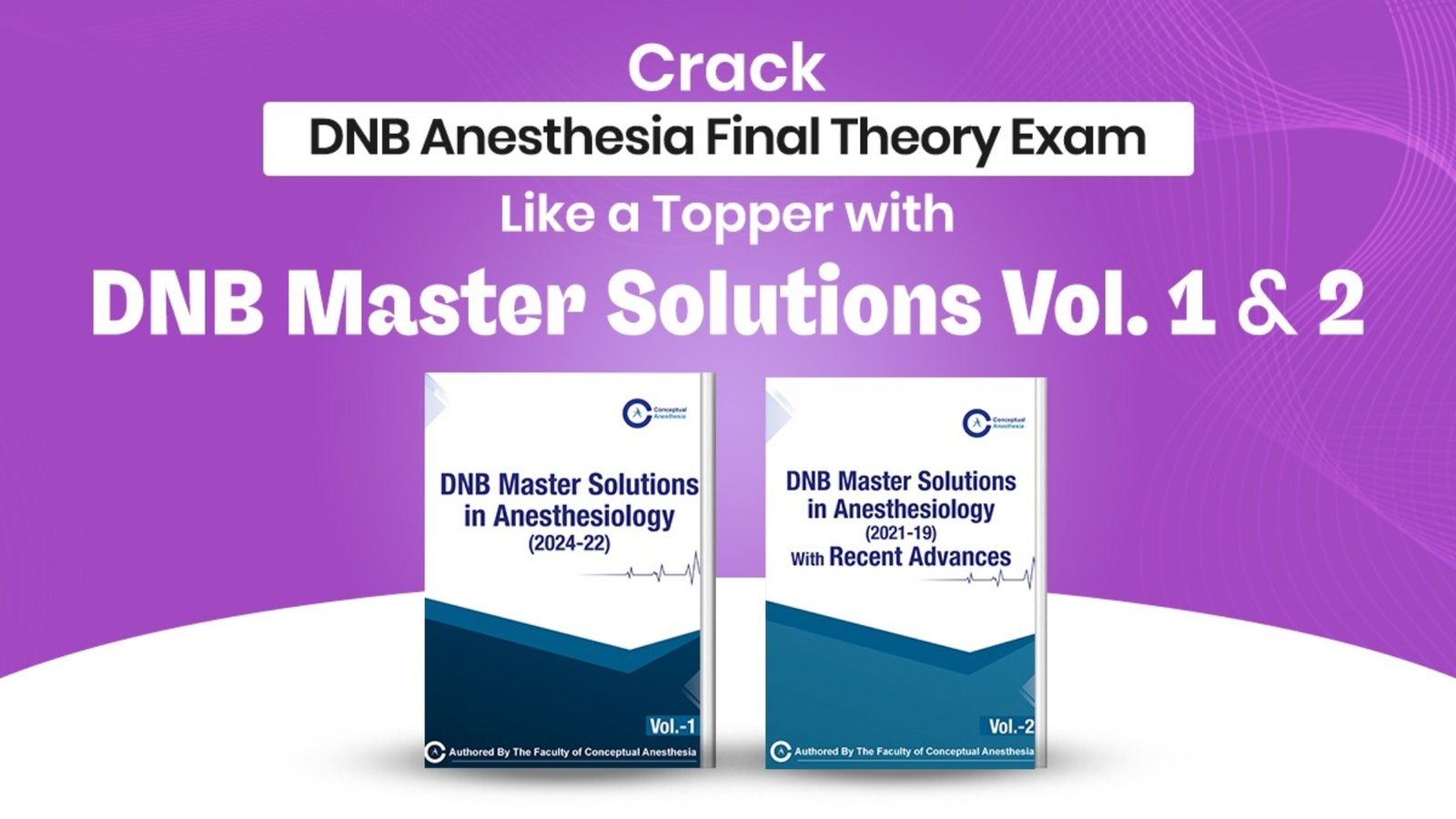
Crack DNB Anesthesia Final Theory Exam Like a Topper with DNB Master Solutions Vol. 1 & 2

Estimated reading time: 3 minutes

Preparing for the DNB Anesthesiology final theory exam is not a cakewalk. It requires not just robust theoretical knowledge but also clinical expertise to tackle actual case scenarios with confidence. To make the preparation process easier, smarter, and more strategic, the DNB Master Solutions in Anesthesiology series presents a structured, high-yield guide, designed by the iconic faculty of Conceptual Anesthesia.

Why You Need the Right Book to Crack the Exam?

The DNB exam is not merely a matter of knowing what’s in the textbook. It’s a matter of knowing how to write your answers, what the examiner is looking for, and where to invest your time. These books are not a compilation of answers—they’re your guide to answer-writing excellence.

DNB Master Solutions in Anesthesiology (2024–2022) – Volume 1

This book includes the latest 3-year question papers (2024, 2023, 2022), thoroughly solved with examiner-friendly language and a structured format.

Highlights:
  • Year-wise Solved Papers (2024–22): Latest question trends and clinical emphasis updated.
  • Accurate, Structured Answers: Composed just the way you must answer in your exam—headings, flowcharts, tables, and point-wise format.
  • Conceptual Clarity: Explanations transcend rote learning—each answer has useful insights you’ll find useful in your OT and ICU rotations.
  • Referencing Recent Guidelines & Protocols: You will remain current with the latest ASA, AHA, and Indian guidelines.
  • Bonus Tips: Examiner insight boxes give you an idea of what the evaluators need to see on your answer sheet.

This book is perfect if you’re going to appear for the next exam or wish to see how your recent toppers constructed their answers.

Click here to check the sample:

DNB Master Solutions in Anesthesiology (2021–2019) – Volume 2

Master the Past. Stay Ahead with Recent Advances.

This book explores slightly older articles (2021, 2020, 2019) but with a twist—it contains Recent Advances that commonly constitute short notes, viva questions, or HOTS (High-Order Thinking Skills) questions in exams.

Highlights:
  • Year-wise Solved Papers (2021–19): With structured answers, clinical correlations, and figures wherever needed.
  • Recent Advances Section: Covers hot topics like ERAS, newer airway gadgets, depth of anesthesia monitoring, robotic anesthesia, and updated CPR protocols.
  • Additional Learning Layers: Each answer is annotated with clinical pearls and cross-links to concepts commonly asked in viva or practicals.
  • Perfect Companion to Volume 1: Together, they ensure you’re prepared not just for theory but for the comprehensive scope of the DNB curriculum.

Volume 2 is a must-have for those who wish to firm up their base while remaining future-fit.

Click here to check the sample:

Why DNB Master Solutions are Preferred by Toppers:
  • Authored by India’s Leading Faculty: You learn from the top brains in anesthesia, ensuring you score well.
  • Not Answers—They’re Mentoring in a Book: The books mentor you in the same way your ideal mentor would—advising you what to write, what to omit, and how to organise.
  • Saves You Time: Rather than wasting hours learning how to present, you have proven templates for success.
  • Bridges the Theory-Practice Gap: With clinical clues, latest concepts, and case integrations.
Conclusion:

Whether you are beginning your preparation or reaching the final revision stage, the DNB master solutions in anesthesiology, Vol. 1 & 2, are essential. They don’t merely assist you in studying but ensure you excel.

Ace your DNB theory exam not harder, but smarter—with the right tools at your fingertips.Because toppers aren’t born—they’re made. Begin your training with Conceptual Anesthesia today.

Share

DNB Anesthesia

How to Prepare for DNB in Anesthesia with Conceptual Anesthesia?

Estimated reading time: 3 minutes

Hello, anesthesiologists! Preparing for your DNB in Anesthesia can sometimes seem like a long, meandering road. The syllabus is massive, clinical responsibilities are many, and juggling it all can sometimes seem daunting. But fear not, with the proper guidance and intelligent study aids, you can nail this exam.

And that’s where Conceptual Anesthesia comes in.

Let’s break it down for you. Here’s a quick guide to how you can study for the DNB Anesthesia exam efficiently and how Conceptual Anesthesia can be your best friend during this journey.

Know the DNB Anesthesia Exam Pattern

Before you start studying with books and lectures, know what you’re preparing for:

  • Theory papers (Paper I-IV)
  • Clinical/practical examination
  • Viva voce

Every section tests not only your knowledge but also your clinical judgment, practical application, and decision-making. So your preparation shouldn’t be about memorisation — it should be about constructing concepts and applying them.

Build Strong Concepts — The Right Way

That’s Conceptual Anesthesia’s greatest strength. It is made with a straightforward intention to enable you to know “why” and not merely “what.”

Because a good anesthetist is not one who simply remembers doses, but one who understands the rationale behind each drug, machine setting, and clinical manoeuvre.

  • Lectures are concept-based and clinically focused.
  • Teachers are very experienced, the best in the country.
  • Videos are well-explained and address high-yield areas — ideal for revision.
  • Sessions also include practical parts required for your viva and clinical rounds.
Expert Created Books: Exclusively for Premium Subscribers

Conceptual Anesthesia Books are a key resource that you MUST have.

  • Specifically created for anesthesia PG students.
  • Addresses fundamental concepts in a concise, easy-to-understand format.
  • Great for theory, MCQ preparation, and developing a solid clinical foundation.
  • Assists you in revising quickly before exams with key concepts and need-to-know charts.

Several students inform us that these books have enabled them to breeze through even challenging viva questions, as they knew the “why” behind things.

Intelligent, Structured Study Plan

Here’s how you can merge your college training + Conceptual Anesthesia:

  • Daily: 1-2 hours of Conceptual Anesthesia videos + clinical postings
  • Weekend: Learn from Conceptual Anesthesia Books — theory + MCQs
  • 1-2 Months Before Exam: Complete revision using video playlists and book summaries
  • Viva Prep: Utilise Conceptual Anesthesia clinical and viva videos — they address precisely what examiners prefer to ask!
Further Features of Conceptual Anesthesia

✨ Topic-wise videos
✨ Viva assistance
✨ Periodic updates on exam-relevant subjects
✨ Case discussion and clinical strategy
✨ Interactive sessions for queries
✨ MCQ practice modules (to remain exam-prepared)

Final Tips for You:
  • Prepare early — don’t wait for last-minute cramming.
  • Concentrate on conceptual clarity, not merely notes.
  • Utilise Conceptual Anesthesia wisely — incorporate it in your routine.
  • Write practised structured answers — critical for DNB.
  • Maintain strong clinical reasoning — that’s what DNB exams most test.
In Short, Conceptual Anesthesia is Made for You!

DNB Anaesthesia is not an exam that can be passed by taking shortcuts. It requires comprehension, clinical knowledge, and confidence.

Conceptual Anesthesia provides you with all of that with best-in-class faculty, concept-based material, real-world guidance, and a tried-and-tested learning framework. Thousands of DNB anesthesia students have faith in it — and so can you.

So, if you’re determined to crack DNB Anesthesia — begin with Conceptual Anesthesia today. You’ll be glad you did!

Share

WhatsApp Image 2025-06-09 at 15.01.24 (1) (1)

Debate of the decade: The AI or the Anesthesia Specialist?

Estimated reading time: 3 minutes

As the field of anesthesia is evolving with technology, naturally, the question arises: Is it possible for Artificial Intelligence (AI) to surpass a human anesthesia specialist? With AI being more and more utilised in perioperative care, one even wonders if it’s just a matter of time before robots rule the operating room. But is it quite so straightforward?

Let us get into this engaging field of human intellect and machine learning.

Recognizing the Role of an Anesthesia Specialist

An anesthesiologist is much more than a sedation provider. He or she is a highly skilled physician who is in charge of maintaining essential functions, administering pain relief, and addressing complicated intraoperative occurrences. His or her judgment can be the difference between life and death in crisis surgical cases.

They oversee:

  • Preoperative evaluations
  • Intraoperative hemodynamic monitoring
  • Airway management
  • Postoperative recovery and pain control

Their choices are not only rooted in data but in intuition, experience, and immediate flexibility—qualities which are hard to substitute with code.

What Can AI Do for Anesthesia?

AI in anesthesia has travelled quite a distance. From patient outcome prediction to drug infusion system automation, AI models can analyse huge volumes of patient information, discover patterns, and provide clinical decision support.

Some current capabilities include:

  • Closed-loop anesthesia delivery systems
  • Predictive analytics for perioperative risks
  • Voice-control systems for the operating room
  • Automated monitoring and record-keeping

All these devices irrefutably augment safety, minimise human error, and help standardise care.

So, Who’s Smarter?

The question shouldn’t be “Who is smarter?” but instead, “What happens when the two collaborate?”

Whereas AI algorithms are quick, precise, and indefatigable, they remain dependent on inputs and cannot grasp contextual subtlety or unplanned circumstances as a human can. An AI can’t replace the on-the-clinical experience, gut feeling, and the skill to improvise on the fly, particularly in crises.

Here’s reality:

  • AI excels at precision, but is terrible at intuition.
  • Humans are great at judgment, but error-prone and fatigable.
  • That is, AI complements the anesthesiologist—it doesn’t substitute for them.
The Future: Collaboration Rather Than Competition

The most intelligent operating room isn’t one operated by AI or a specialist in isolation. It’s where AI systems assist human expertise, allowing safer, quicker, and more efficient care. Anesthesia experts who adopt these technologies will be more productive, more informed, and prepared to make high-quality decisions.

Conclusion:

Technology is not the enemy of the anesthesiologist—it’s their friend. The true power is in the joining of hands between man and machine. With this partnership, the idea isn’t to outsmart each other, but to take patient care to new and unprecedented heights.

So, which one is smarter? The answer is easy: Together, they’re unstoppable.

Share

Anesthesia Residency

How to Survive Anesthesia Residency: Tips for First-Year Residency

Estimated reading time: 3 minutes

Beginning your first year residency in Anesthesia Residency feels like being tossed into the deep end. The residency program requires mental strength, emotional resilience, and physical endurance. For most anesthesia residents, this period feels daunting, but with a proper approach and attitude, you can succeed. Here are some down-to-earth tips to guide you through the pivotal first year of your internship program as a junior resident doctor of anesthesiology.

1. Learn the Fundamentals First
  • During your anesthesia residency, the quicker you become familiar with basics such as airway management, drug dosing, and monitoring policies, the easier for you.
  • They are your lifelines during OT. Keep a handy small handbook or use a good app to update universal drug doses, induction procedures, and emergency handling.
2. Obsess about Observation
  • Your seniors and consultants have years of experience. Watch them closely—how they position patients, how they assess airways, their decision-making under pressure. 
  • This is where real learning happens. Don’t hesitate to ask questions; every clarification could save a life someday.
3. Stay Organised and Ahead
  • Time management is extremely important in anesthesia residency programs. 
  • Have your pre-op note-taking, patient summaries, and investigations organised. 
  • Arrive early for cases, review your workstation carefully, and double-check everything—both the machine and the drugs. Tiny habits avert giant mistakes.
4. Respect the OT Ecosystem
  • Anesthesiology is a collaborative practice. Establish good interpersonal relationships with surgeons, nurses, and technicians. 
  • Communication and mutual respect will make your OT smoother and safer. 
  • Never belittle the amount you can learn from senior staff, even beyond the doctor fraternity.
5. Take Care Of Yourself
  • The first year of residency is tiring. You’ll endure sleepless nights, back-to-back cases, and high-pressure decision-making. Stay hydrated, have healthy snacks on hand, and rest whenever possible. 
  • Don’t overlook burnout—talk to colleagues, take mini-vacations, and seek help when necessary.
6. Read Smart, Not Just Hard
  • With time limits, reading all the textbooks from cover to cover isn’t feasible. Read case-wise. 
  • If you see a patient with a pheochromocytoma, read all there is to know about it on that day. 
  • Active learning from a scenario rather than passive reading of textbooks will stick much longer.
7. Make Use of Correct Resources: Why Conceptual Anesthesia is a Game-Changer
  • During your initial year residency, you require a resource which doesn’t merely instruct you in theory, but gets you ready for practical OT situations. Conceptual Anesthesia is precisely that designed. 
  • With organised videos, clinically applicable descriptions, and actual cases, it closes the gap between textbook and practice.
  • Whether you’re preparing for your next case or refreshing basics following a long shift, this platform is a must for all residency physicians.
  •  It’s the only one to keep up with you—from your internship for students in their 1st year to high levels of your residency program.
8. Ask, Reflect, Improve
  • Each day in the OT is a chance to improve. After each case, ask yourself what worked well, what might have been improved, and what you’ve learned. 
  • Maintain a logbook or electronic log—reflection allows you to mature rapidly in your first-year residency.
Conclusion:

Succeeding and surviving in anesthesia residency is all about balance—self-care, teamwork, and clinical excellence. You don’t have to know everything, but you should arrive prepared, remain hungry to learn, and improve each and every day. Keep pushing forward. The path is rough, but you are tougher.

Share

DNB Practical Exam

How to Prepare for DNB Practical Exam in Anesthesia Residency?

Estimated reading time: 4 minutes

The DNB practical exam for anesthesia is an important milestone in the career of every resident. Unlike theoretical examinations, it examines not only your book knowledge but also your clinical decision-making, communication, and hand skills. Many students panic as the practical exam comes near, but with the right approach and the right guidance, you can perform confidently.

In this blog, we will discuss how to prepare for the DNB practical exam during anesthesia residency, and how Conceptual Anesthesia platform is a must for your success.

1. Know the format of the DNB Practical Exam

Know what you’re getting yourself into first. The DNB practical generally consists of:

  • Viva-Voce (Oral examination)
  • OSCEs (Objective Structured Clinical Examinations)
  • Case Presentations (Short and Long cases)
  • Skill Stations (Demonstration of technical skills)

Each part demands a different preparation style, so you must structure your studies accordingly.

2. Build a Strong Clinical Foundation

The practical examiners expect you to:

  • Think clinically, not just theoretically.
  • Justify your management plans with solid reasoning.
  • Show mastery in procedures like intubation, regional blocks, airway management, and critical care interventions.

Start practising case discussions early, and learn to speak clinically — your articulation matters almost as much as your content.

3. Practice Viva and OSCE Rigorously

For DNB Anesthesia practicals, Viva preparation is non-negotiable. Give importance to:

  • Standard anesthesia equipment and ventilators
  • Emergencies (such as crash intubation, management of cardiac arrest)
  • Pharmacology of drugs
  • ABG, ECG, X-ray, and PFT interpretation

In the same vein, OSCEs are used to evaluate quick clinical reasoning. Regular mock OSCE practice is a total game-changer.

How Conceptual Anesthesia Assist in DNB Practical Exam?

Conceptual Anesthesia is tailored to prepare residents for actual application, not merely theoretical exams. 

Here’s how it makes you crack the DNB practical:

  • Conceptual clarity: Each subject is described clinically, not academically.
  • Case-based learning: Sessions simulate actual exam situations — short cases, long cases, viva, and OSCE-style discussions.
  • Skill demonstration videos: A must for refining your techniques for skill stations.
  • Clinical protocols: Step-by-step procedures for anesthesia management, ICU handling, and airway emergencies.

If you desire to talk like a clinician and think like an anesthetist, Conceptual Anesthesia is your ultimate friend in the DNB practical ride.

Why You Need to Own the Conceptual Anesthesia Books?

Conceptual Anesthesia books are not textbooks —these 7 books are your residency survival and your DNB practical secret weapon. These books are exclusively available for only for Conceptual Anesthesia premium users.

Here’s why they are a must-have:

  • Easy explanations: Intricate concepts explained in simple-to-grasp terms.
  • High-yield summaries: Ideal for last-minute revision before the exam.
  • Viva questions and answers: Assists you in pre-empting what the examiner will ask.
  • OSCE tips for preparation: Comprehensive coverage of how to tackle OSCE stations.
  • Latest guidelines and updates: Always clinically appropriate and current with current practice.

When the examiners ask penetrating questions during vivas, having the Conceptual Anesthesia books in your prep toolkit provides you with the confidence to respond authoritatively.

Last Minute Tips for DNB Anesthesia Practical Success
  • Begin early: Don’t wait for postings or results, practical preparation should be started in your last year.
  • Group discussions: Case practice and viva with colleagues, which gives the real exam experience.
  • Daily viva practice: Spend 30 minutes daily.
  • Clinical exposure: Be actively involved in ICU, OT, and pain clinics — experience trumps theory every time.
  • Stay composed: Practical exams are as much about attitude as knowledge.
Conclusion:

Preparing for the DNB practical exam in anesthesia can look intimidating, but with an organised strategy and the right guidance, you can pass the exam. Conceptual Anesthesia, its platform and books, provides you with the competitive edge you require to not only clear but also score high in your DNB practicals.

If you have not yet done so, now is the ideal time to get into the Conceptual Anesthesia classes. Hurry! Join now and be a part of Conceptual Anesthesia. Be consistent. Be methodical. Be conceptual.

Share

Anesthesia Residency

Government Hospitals vs Private Hospitals – Which is Better for Anaesthesia Residency?

Estimated reading time: 3 minutes

If you’re a medical graduate considering your specialisation, Anesthesia Residency could be one of the most fulfilling and rewarding career options.  From handling critical care and pain management to being a crucial part of the surgical team, anesthesia residents play an indispensable role in modern medicine. As an anesthesia resident, you will be trained to remain calm under stress, make fast decisions, and work in tandem with surgeons and critical care units.

In this blog, we will discuss why selecting an anaesthesiology residency may be the ideal choice for you, and contrast the training experience in government hospitals with private hospitals.

Why Choose Anaesthesia Residency?

Anesthesiology is the spine of surgical medicine. It is a field where you become the unsung hero, providing patient safety, tracking vital signs, and taking split-second decisions that make a difference between life and death. Here’s why more students are choosing anesthesia residency programs:

  • High demand: With more and more surgeries being performed, the need for effective anesthesiologists is reaching a peak.
  • Critical thinking & autonomy: You’re not simply taking orders—you’re taking life-saving decisions on a daily basis.
  • Broad scope: You’re not limited to the OR. Pain clinics, ICUs, trauma care, and palliative medicine all need anesthesiologists.
  • Well-compensated speciality: It’s one of the highest-paying branches post-residency.

Remember that choosing a residency is crucial, but the residency hospital where you’ll train is also important. The environment, case exposure, mentorship, and resources make a world of difference.

Government Hospitals vs Private Hospitals – Which is Better
1. Case Load & Exposure
  • Government Hospitals are famous for their heavy patient load, these hospitals give you enormous exposure to a broad range of surgical cases. You’ll handle everything from simple appendectomies to major polytrauma cases.
  • In Private Hospitals, the case load is lighter, but you may get more specialized procedures with improved equipment and infrastructure.

Also Read: How Many Years of Anesthesia Residency in India?

2. Autonomy & Responsibility
  • In Govt hospitals, you’ll probably have more autonomy as an anesthesia resident, usually making important decisions under guidance.
  • Private hospitals offer more consultant-oriented care, which can mean less hands-on experience, particularly during the initial stages of residency.
3. Infrastructure & Technology
  • Private Hospitals generally have better facilities, with exposure to newer machinery, newer monitoring systems, and better working conditions.
  • Government Hospitals could have fewer resources, but that keeps you resourceful and clinically quick-witted—a valuable skill for any anesthesiologist.
4. Academic Environment
  • Government Hospitals: Best residency programs in anesthesia are typically located in the best government medical colleges with formal teaching, regular seminars, and emphasis on research.
  • Private Hospitals: A few private hospital residency programs are associated with well-known universities and have begun offering equally good academics as well as mentorship.
Conclusion: Choose Wisely

See, choosing the best anesthesia residency is not about going to the fancy hospital—it’s about which one will give you the best training, highest exposure, and good mentorship. Either in a high-volume government hospital or a tech-savvy private setup, the quality of your commitment is what sets you apart.

Also Read: What Comes After Anesthesia Residency? Top Career Options for Residents

So when you’re comparing anesthesiology residency programs, ask yourself:

  • Will I get practical hands-on training?
  • Will I be mentored academically?
  • Will I develop as a clinician?

Make the right choice. Your anesthesiology future is not only dependent on the hospital, but on how well you capitalise on the opportunity.

Share