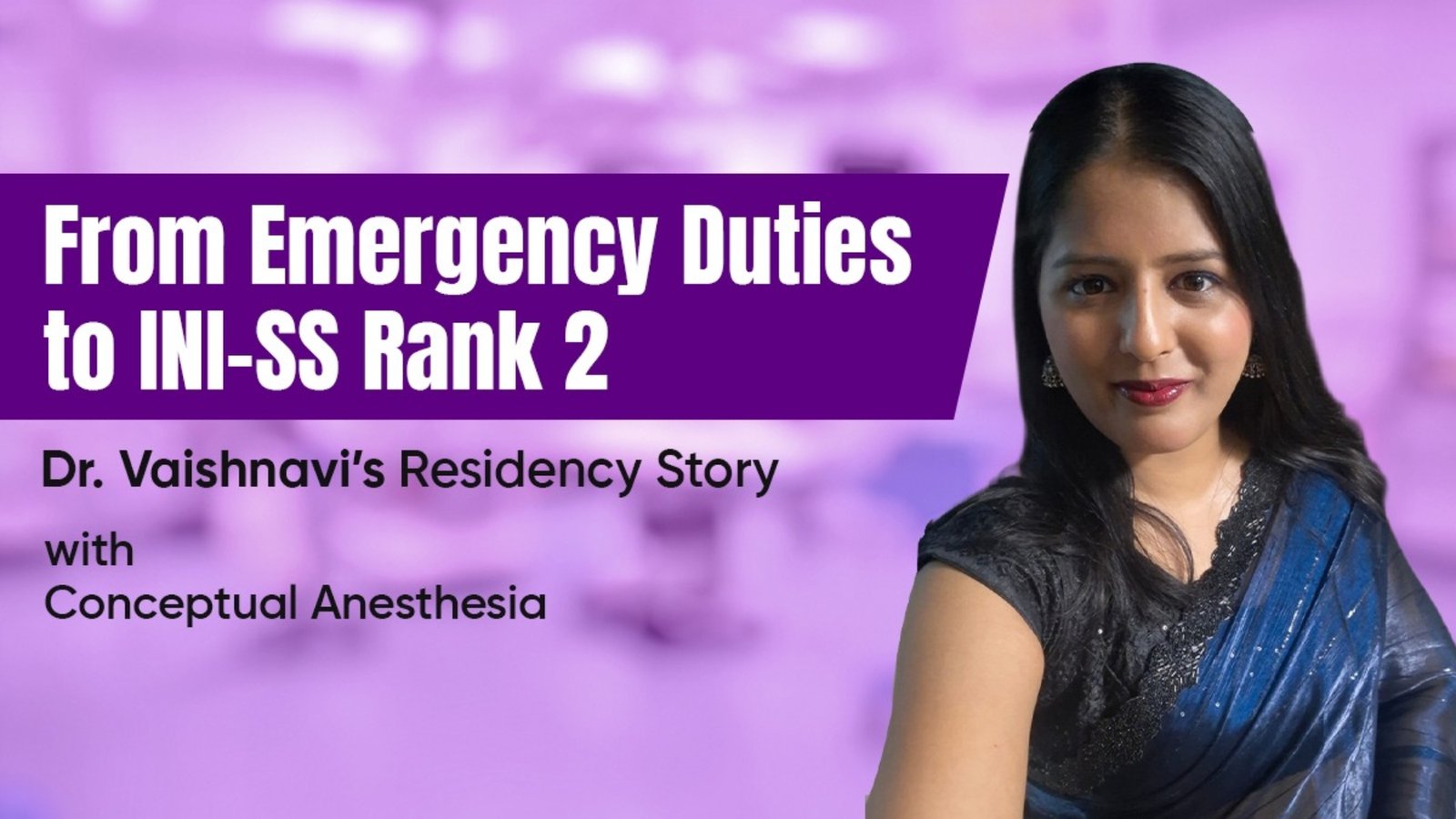
Dr. Vaishnavi’s

From Emergency Duties to INI-SS Rank 2: Dr. Vaishnavi’s Residency Story with Conceptual Anesthesia 

Estimated reading time: 5 minutes

As we al know that  anesthesia residency is not easy. Long OT hours. Night duties. Back-to-back emergencies. PAC clinics. Endless fatigue. 

Most residents barely get time to sleep, let alone prepare for entrance exams. And yet, Dr. Vaishnavi managed to do something truly extraordinary, she secured Rank 2 in the INI-SS Oncoanesthesia exam while completing her MD anesthesia residency

Her journey is not about shortcuts. 
It’s about smart learning, discipline, and having the right guidance at the right time — through Conceptual Anesthesia

Life at GSVM: Where Residency Is Truly Hectic 

Dr. Vaishnavi completed her MD Anesthesia from GSVM Medical College, Kanpur (2022–2025 batch) — a hospital known for its heavy patient load and nonstop emergencies. 

“We used to get two to three emergency duties every week. That was normal for us from first year to third year.” 

Like most residents, her focus was not on cracking super speciality exams at first. Her only goal was to survive residency with confidence. 

She wanted to: 

  • Manage cases properly 
  • Answer seniors in the OT 
  • Understand anesthesia, not just memorize it 

And that’s when she discovered Conceptual Anesthesia

Finding Conceptual Anesthesia at the Right Moment 

In August 2023, just before starting her second year, Dr. Vaishnavi came across Conceptual Anesthesia on Instagram. 

She was exhausted. 
She barely had time. 
Textbooks felt impossible to read. 

So she started with small steps. 

“I began with basic videos like pharmacology and spinal anesthesia. These are the things juniors are constantly asked in OT.” 

She wasn’t thinking about SS exams yet. 
She was thinking about becoming a better resident. 

Studying Around OT Cases – Not Against Them 

Her study style was simple and practical. 

If a TURP case was posted for the next day → she watched spinal anesthesia 
If she was posted in gyne OT → she watched gyne anesthesia videos 
If in general surgery → she revised laparoscopy anesthesia 
Emergency duty → 1–2 videos whenever she got time 

“We get PAC one day before and cases are listed in the evening. I used to watch the relevant video for the next day’s OT.” 

This way, her learning was directly connected to real patients. 
No overload. No panic. Just focused learning. 

Why Conceptual Anesthesia Fit Perfectly into Residency Life?

During residency, reading textbooks line by line is honestly impossible. 

“We simply don’t get that kind of time. Videos and PDFs are much easier to manage between duties.” 

Conceptual Anesthesia became her daily companion: 

  • Quick videos between cases 
  • PDFs for revision 
  • Instrument and pharmacology notes for spotters 
  • Long and short case books for exams 

Everything was crisp, clear, and straight to the point. 

Cracking INI-SS in Just 10–12 Days 

Her INI-SS exam happened between her MD exams and results. She barely had 10–12 days after finishing duty. 

So she planned smartly. 

She focused on: 

  • General anesthesia basics 
  • Tube sizes, purity, equipment 
  • High-yield PDFs 
  • Core concepts 

“If we miss general anesthesia, we won’t even qualify the first round.” 

Despite having limited oncoanesthesia exposure in her institute, the oncoanesthesia lectures on the Conceptual Anesthesia app helped her build confidence. 

And the result? 

✨ INI-SS Rank 2 ✨ 

The Books That Made Revision Easy 

Conceptual Anesthesia’s revision books played a huge role: 

  • Long question book 
  • Long & short cases 
  • Pharmacology PDF 
  • Instrument PDF 

“Students usually ignore instruments, but 2–3 spotter questions come from there. These books helped me revise quickly.” 

They were short, clear, and perfect for last-minute revision. 

Her Message to Junior Residents 

Dr. Vaishnavi keeps it real: 

“First focus should be on residency. Understand your cases. We are doing anesthesia to save lives, not just to crack exams.” 

She believes Conceptual Anesthesia should be used to: 

  • Understand monitoring 
  • Learn fluid calculations 
  • Handle instruments confidently 
  • Manage OT cases properly 

When your concepts are strong, your ranks will automatically follow. 

Conclusion: A Journey Every Resident Can Relate To 

Dr. Vaishnavi’s story is not about studying 12 hours a day.  It’s about using the right platform in the right way. 

Conceptual Anesthesia helped her: 

  •  Learn alongside real OT cases 
  • Build strong fundamentals 
  • Revise quickly during duty breaks 
  •  Prepare smartly for exams 
  • Grow into a confident anesthetist 

From emergency duties to INI-SS Rank 2, her journey proves that smart learning beats long hours. 

If you’re an anesthesia resident trying to balance OT life and academics then  Conceptual Anesthesia can be your strongest support system. 

Share

Anesthesia Residents

Master’s Degrees in Anaesthesia After MBBS in India: MD, DNB, and DA

Estimated reading time: 4 minutes

Anaesthesia is often misunderstood. Many people think it’s only about putting patients to sleep before surgery. Anyone who has spent even a few days in an operating theatre or ICU knows that this couldn’t be further from the truth.

The Anesthesia branch is about vigilance, judgment, and responsibility. When things go wrong during surgery or in the ICU, the anaesthesiologist is usually the first one expected to act—and act fast.

If you’re an MBBS graduate considering Anaesthesia for postgraduation, it’s important to understand what degrees are available in India and what kind of future they actually offer. Let’s talk about this honestly, without exaggeration.

MD (Doctor of Medicine) in Anesthesiology

MD – Doctor of Medicine in Anesthesiology is the most commonly pursued postgraduate degree in Anaesthesia in India. It is a three-year course conducted in medical colleges recognised by the National Medical Commission (NMC).

MD Anaesthesiology training is intense. You don’t just learn drugs and doses—youknown how to manage airways, unstable vitals, emergency situations, and critically ill patients. A large part of your residency is spent inside operating theatres and Intensive Care Units.

Over time, you start understanding that Anaesthesia is less about routine work and more about preparedness. Every case is different, and that’s what keeps the branch challenging.

Scope After MD (Doctor of Medicine) Anaesthesiology

After completing MD Anesthesia, most doctors work as consultant anaesthesiologists in hospitals. Many also choose to:

  • Work predominantly in ICUs
  • Take up senior residency and later teaching roles.
  • Pursue further training in critical care or pain medicine.

MD Anaesthesia offers strong job stability. Surgical services are expanding across India, and anesthesiologists are needed everywhere—from small nursing homes to large corporate hospitals.

DNB (Diplomate of National Board) in Anaesthesia

DNB – Diplomate of National Board in Anaesthesia is awarded by the National Board of Examinations (NBE). Like MD, it is a three-year postgraduate program and is well recognised across the country.

DNB training usually happens in large hospitals rather than traditional medical colleges. This often means heavier workloads and greater clinical responsibility early on. Many DNB residents gain excellent hands-on experience because of this exposure.

In real-world practice, the difference between MD and DNB matters far less than how confident and competent you are clinically.

Scope After DNB (Diplomate of National Board) Anaesthesia

After DNB Anaesthesia, doctors can:

  • Work as consultants in private and corporate hospitals
  • Join trauma centres and ICUs
  • Enter academics after fulfilling eligibility norms.
  • Go on to do fellowships or super-specialisation

Today, DNB Anaesthesia is widely accepted, and most hospitals value skill and experience over the name of the degree.

DA (Diploma in Anesthesia): What You Should Know

DA – Diploma in Anesthesia was a two-year postgraduate diploma that existed earlier. Over the years, this course has been largely phased out, with MD and DNB becoming the standard options.

Doctors who already have a DA degree continue to practice successfully, especially with experience. However, for new aspirants, MD or DNB Anaesthesia is the recommended route.

What Can You Do After Postgraduate Anaesthesia?

Many anaesthesiologists choose to specialise further once they complete their postgraduate degree. Some common paths include:

  • Critical Care Medicine
  • Pain Medicine
  • Cardiac Anaesthesia
  • Neuro-Anaesthesia
  • Paediatric Anaesthesia

These areas allow doctors to focus on specific interests and often come with higher responsibility and expertise-based roles.

Final Words: 

Choosing between MD (Doctor of Medicine) Anaesthesiology and DNB (Diplomate of National Board) Anaesthesia is important, but choosing Anaesthesia itself is the bigger decision. Both degrees offer strong careers, steady demand, and long-term security in India.

If you’re willing to take on responsibility when it matters most, Anaesthesia can be one of the most rewarding medical careers you’ll ever choose.

Share

Dr. Payel Bose

Endocrine Emergencies in the ICU: What Every Resident Must Get Right

Estimated reading time: 5 minutes

In the ICU, endocrine emergencies rarely announce themselves clearly. They often sit quietly behind hypotension, altered sensorium, or shock that does not respond the way you expect. For residents, the danger is not lack of knowledge, but doing the right treatment in the wrong order.

These clinical scenarios highlight the decisions that truly matter in real-life ICU practice.

Myxedema Coma: Steroids Always Come First

A 72-year-old woman is brought to the ICU during peak winter after being found unresponsive at home. She has a known history of hypothyroidism but stopped her medications months ago. On examination, she is hypothermic, hypotensive, bradycardic, and drowsy. Her skin is dry and puffy, her reflexes are delayed, and ECG shows sinus bradycardia with low-voltage complexes. Laboratory tests reveal hyponatremia, hypoglycemia, very high TSH, and low free T4.

This presentation fits myxedema coma, a rare but fatal form of decompensated hypothyroidism.

The most important step here is often missed in emergencies:
IV hydrocortisone must be given before thyroid hormone replacement.

Adrenal insufficiency commonly coexists in these patients, especially in autoimmune thyroid disease or pituitary disorders. If thyroid hormone is given without steroid coverage, it can increase metabolic demand and precipitate an adrenal crisis.

Practical approach
  • Start IV hydrocortisone 100 mg immediately, then continue every 8 hours
  • Follow with IV levothyroxine (loading dose 200–400 µg)
  • Avoid T3 boluses due to arrhythmia risk
  • Provide supportive care with cautious rewarming, fluids, ventilatory support, and vasopressors if needed

Clinical reminder: Never give thyroid hormone alone in suspected myxedema coma.

Thyroid Storm: Sequence Is Everything

A 36-year-old woman with untreated Graves’ disease presents with high fever, agitation, vomiting, delirium, and severe tachycardia. ECG shows atrial fibrillation with a rapid ventricular response. Her TSH is suppressed, and free T4 is markedly elevated.

This is a classic thyroid storm, and survival depends on correct sequencing of therapy.

The most critical rule:
Iodine should never be given before antithyroid drugs.

Giving iodine too early provides substrate for new hormone synthesis, worsening thyrotoxicosis (Jod-Basedow effect).

Correct treatment order
  1. Beta-blocker (propranolol) to control adrenergic symptoms
  2. Propylthiouracil (PTU) to block hormone synthesis and T4-to-T3 conversion
  3. Iodine solution (only after at least 1 hour of PTU)
  4. Hydrocortisone for adrenal support and additional T3 suppression

Reversing this order can rapidly worsen the patient’s condition.

Adrenal Crisis in Septic Shock: Treat First, Test Later

A 48-year-old man on long-term oral prednisone is admitted with septic shock due to pneumonia. Despite adequate fluids and high-dose vasopressors, his blood pressure remains low. Random cortisol is low.

This scenario strongly suggests adrenal crisis due to HPA axis suppression.

Waiting for ACTH stimulation tests or repeat cortisol levels is dangerous. These tests are unreliable during critical illness and delay life-saving treatment.

What should be done
  • Give IV hydrocortisone 100 mg stat
  • Continue with 50 mg every 6 hours or continuous infusion
  • Hydrocortisone is preferred because it provides both glucocorticoid and mineralocorticoid effects

Golden ICU rule: Never delay steroids in shock unresponsive to fluids and vasopressors.

Diabetic Ketoacidosis: Fluids Before Insulin

A young woman with type 1 diabetes presents with Kussmaul breathing, abdominal pain, hypotension, and altered mental status. Labs show severe hyperglycemia, metabolic acidosis, and ketonemia.

The instinct to start insulin immediately is common—but incorrect.

The primary problem in DKA is severe dehydration due to osmotic diuresis.

First step
  • Give 1 litre of isotonic saline immediately

This restores circulation, improves renal perfusion, and starts correcting hyperglycemia even before insulin.

Only after hemodynamic stabilization should insulin be started. Potassium must always be checked beforehand, as insulin drives potassium intracellularly. Bicarbonate is reserved for extreme acidosis (pH < 6.9) with cardiovascular compromise.

Key takeaway: In DKA, fluids save lives before insulin does.

HHS: Correct Slowly or Pay the Price

An elderly man with type 2 diabetes presents with confusion. His glucose is extremely high, sodium is elevated, osmolality is high, but there are no ketones and pH is near normal.

This is hyperosmolar hyperglycemic state (HHS).

Unlike DKA, mortality in HHS is higher, largely due to cerebral edema or circulatory collapse caused by rapid correction.

Management principle
  • Gradual rehydration is the cornerstone

Start with isotonic saline to restore volume, then switch to hypotonic fluids based on corrected sodium and osmolality. Glucose should fall slowly—about 50–75 mg/dL per hour. Insulin is added only after partial volume correction.

Remember: Rapid shifts in osmolality are more dangerous than hyperglycemia itself.

Hypoglycemia in the Sedated ICU Patient

A ventilated patient on sedation and insulin infusion develops hypotension and sluggish pupils. Capillary glucose is found to be dangerously low.

In sedated or paralyzed patients, classic adrenergic signs of hypoglycemia may be absent.

The most reliable early indicator in such cases is a sudden fall in EEG activity, not sweating or tachycardia.

Clinical lesson: Always suspect hypoglycemia in unexplained neurological or hemodynamic deterioration in ICU patients.

Final Words

Endocrine emergencies are about priorities and order, not just diagnosis.
Steroids before thyroid hormone.
PTU before iodine.
Fluids before insulin.
Treatment before testing.

Getting these steps right often makes the difference between recovery and collapse.

Share

Dr. Kishore Mangal

ICU Patient Can’t Move – Can You Diagnose the Cause? Critical Care MCQs Explained by Dr. Kishore Mangal

Estimated reading time: 4 minutes

In the ICU, a patient who suddenly cannot move is a clinical emergency. While stroke and intracranial hemorrhage are often the first thoughts, many other neurological causes must be considered—especially in critically ill patients.

This blog walks you step by step through how to localise weakness, differentiate causes, and apply this knowledge to high-yield ICU MCQs.

Step 1: Localising the Cause of Weakness in the ICU

Generalised weakness in ICU patients can be classified based on the level of neurological involvement.

1. Brainstem Pathology – Locked-In Syndrome

When the brainstem is involved, patients may present with:

  • Sudden onset quadriplegia
  • Preserved vertical eye movements
  • Ability to open eyelids
  • Complete inability to move limbs

This classic presentation is called Locked-In Syndrome.
👉 Diagnosis: Neuroimaging (MRI brainstem)

2. Motor Neuron Diseases (UMN + LMN Involvement)

Diseases like ALS or other motor neuron disorders show:

  • Increased reflexes
  • Upper motor neuron signs
  • High muscle tone
  • Fasciculations
  • Positive Babinski sign
  • Asymmetrical weakness

These features help differentiate motor neuron disease from peripheral causes.

3. Spinal Cord Causes – Acute Transverse Myelitis

Spinal cord pathology often presents as paraplegia or quadriplegia.

Key features of Acute Transverse Myelitis:
  • Motor and sensory loss below a defined spinal level
  • Clearly demarcated sensory level
  • Possible bladder and bowel involvement
  • Rapid progression

👉 Diagnosis: Contrast MRI spine

Other spinal causes include:

  • Tumors
  • Epidural abscess
  • Spinal cord infarction
4. Peripheral Nerve Disorders
Guillain-Barré Syndrome (GBS)

The most common peripheral nerve cause in ICU.

Typical features:

  • Ascending symmetrical weakness
  • Areflexia
  • Recent infection or vaccination
  • No UMN signs

👉 Diagnosis:

  • Lumbar puncture
  • Nerve conduction studies
ICU-Acquired Weakness / Critical Illness Neuromyopathy

Seen in patients with:

  • Prolonged ICU stay
  • Multi-organ dysfunction
  • Sepsis

Clinical clues:

  • Symmetrical weakness
  • Normal cranial nerves
  • Absent reflexes
  • Difficulty weaning from ventilator
  • Possible diaphragmatic involvement

👉 Investigations:

  • Nerve conduction studies
  • CPK (may be mildly elevated in myopathy)
Other Peripheral Causes
  • Vitamin B12 deficiency
    • Glove and stocking sensory loss
    • Megaloblastic anemia (↑ MCV, MCH)
  • Heavy metal poisoning
5. Neuromuscular Junction Disorders
Myasthenia Gravis

Key features:

  • Ptosis and diplopia
  • Cranial muscles involved early
  • Fatigability (worsens with activity)
  • Weakness worse in the evening

👉 Diagnosis:

  • ACh receptor antibodies
  • EMG
  • Edrophonium test
Lambert-Eaton Syndrome

How it differs from Myasthenia:

  • Often associated with malignancy
  • Weakness improves with exercise (important exam point)
Botulism & Organophosphate Poisoning
  • Cranial nerve weakness
  • History of toxin ingestion
6. Muscle Disorders (Myopathies)

Common ICU-related causes:

  • Critical illness myopathy
  • Steroid-induced myopathy
  • Electrolyte imbalance
  • Malnutrition
  • Hypercatabolic states

Clinical pattern:

  • Predominantly proximal muscle weakness
  • Reflexes are usually preserved initially
Neuropathy vs Myopathy – Quick Differentiation
FeatureNeuropathyMyopathy
WeaknessDistalProximal
Sensory symptomsPresentAbsent
ReflexesLost earlyPreserved
FasciculationsMay be presentAbsent
UMN vs LMN Lesions – Exam Rule
  • Lesión above anterior horn cell → UMN
  • Lesion at or below the anterior horn cell → LMN

UMN:
More tone, more reflexes, positive Babinski
LMN:
Less tone, less reflexes, muscle atrophy, fasciculations

High-Yield ICU MCQs Explained
MCQ 1: Transverse Myelitis vs GBS

Most specific feature of transverse myelitis:
Well-defined sensory level on trunk

MCQ 2: Shock in High Thoracic Myelitis

Patient with T4 lesion, hypotension, bradycardia, warm extremities:
Neurogenic shock

MCQ 3: No Improvement After Steroids in Myelitis

Next best step after IV methylprednisolone failure:
Plasmapheresis

Guillain-Barré Syndrome – ICU Essentials
When to Intubate in GBS?

Use the 20–30–40 rule:

  • FVC < 20 ml/kg
  • MIP < 30 cm H₂O
  • MEP < 40 cm H₂O

Additional red flags:

  • Bulbar weakness
  • Pooling of secretions
  • Facial diplegia
  • Rising CO₂ despite tachypnea
GBS Overview
  • Autoimmune demyelinating neuropathy
  • Often post-infection
  • Ascending paralysis
  • Peak at 2–4 weeks
CSF:
  • High protein
  • Normal cell count
    (Cyto-albuminologic dissociation)
Types of GBS (Exam Favorite)
  • AIDP / AMSAN – Motor + sensory
  • AMAN – Pure motor
  • Miller-Fisher Syndrome – Ophthalmoplegia, ataxia, areflexia
  • PCB variant – Pharyngeal, cervical, brachial weakness
  • Autonomic GBS – Severe dysautonomia
GBS Treatment
  • IVIG or Plasma Exchange (equally effective)
  • ❌ No role of steroids
  • Supportive ICU care is crucial
Prognostic Scores in GBS
  • EGOS – Predicts walking ability at 6 months
  • EGRIS – Predicts risk of respiratory failure
Final Takeaway

In ICU patients with weakness, localisation is everything.
From brainstem to muscle, a structured approach helps you diagnose faster, manage better, and answer MCQs confidently.

This session is not just exam-oriented—it mirrors real ICU decision-making, where early diagnosis can change outcomes.

Subscribe to Conceptual Anesthesia for more insightful sessions.

Share

Anesthesia Residents

Confused About Choosing Anesthesia as Your Branch? Here’s a Guide

Estimated reading time: 4 minutes

If you’re in the middle of NEET PG counselling and staring at “MD/DNB Anesthesia” on your screen, it’s very normal to hesitate.

  • Is it a good branch?
  • Is MD better than DNB? What about DA?
  • What can I do after anesthesia—critical care, abroad, freelancing?

This blog takes you through anesthesia as a career—from the day you join residency to the day you retire, including critical care as a subspecialty. Think of it as the honest senior you wish you had on call right now.

1. MD vs DNB vs DA – Does the Degree Really Matter?

Once you get your NEET PG rank and decide on anesthesia, these are your main academic options:

  • MD Anesthesia
  • DNB Anesthesia
  • DA (Diploma in Anesthesia) – now gradually being phased out in many places

The first doubt everyone has:

“If I don’t do MD, will it ruin my career?”

In anesthesia, your skill depends far more on exposure than on the letters after your name.

What actually matters?

Wherever you train—MD or DNB—check:

  1. Patient inflow:
    Busy hospital, full OT lists, emergency load.
  2. Variety of surgeries:
    • General surgery
    • Ortho
    • Obs-Gyn
    • Uro, Onco, etc.
  3. Super-speciality OTs:
    • Neurosurgery
    • Cardiac
    • Pediatric
    • Robotic surgery, etc.

If you’re regularly doing spinals, epidurals, blocks (landmark & ultrasound-guided), intubations, managing sick patients and complex OT lists, you’ll come out confident—whether it was MD or DNB.

Many DNB residents from high-volume corporate or big city hospitals are often more hands-on than MD residents from smaller places with low caseload. So don’t worship the degree; evaluate the institute and workload.

Where does DA fit in?

DA is a diploma, and in most branches, diplomas are being phased out. If you’re forced to choose DA because you’re not getting MD/DNB:

  • Prefer DA + Secondary DNB
    → This combination is considered equivalent to MD in the job market.
  • DA alone will restrict you in the long run, especially for corporate jobs or teaching posts.
Bond vs No Bond

This changes state-wise and institute-wise, but broadly:

  • MD (Government colleges): Usually has a PG bond (often 1–2 years, varies by state).
  • DNB (Private/Corporate hospitals): Often no bond, which is a big plus—you can move on to SRship or private jobs earlier.
  • DA: Usually comes with a state-defined bond. Secondary DNB typically does not have a bond.
After Residency: What Are Your Career Options?

Once you finish MD/DNB (and bond, if any), you stand at a huge crossroads. Some options:

1. Complete Your Bond

If you have a bond in a government hospital:

  • You now work with more responsibility, more independence, and more complex cases.
  • It’s a good phase to mature as an independent anesthetist.
2. SRship (Senior Residency)

If you don’t have a bond (often with DNB), a Senior Resident (SR) job is highly recommended.

Strategic tip:
Choose an SRship in a hospital that fills the gaps of your residency.

Example:

  • If your residency was heavy on GA and onco cases, but weak in regional anesthesia and ortho →
    Choose an SRship where you’ll get:
    • Spinals, epidurals, nerve blocks
    • Peripheral blocks, regional techniques

You can genuinely “patch” your weaknesses in SRship.

3. Freelancing

You can also jump straight into freelancing:

  • Buy basic equipment (laryngoscopes, tubes, drugs, etc.)
  • Network with surgeons and smaller centres
  • Start getting calls for elective and emergency cases

Your degree (MD/DNB) is enough to start; your skills and reliability determine how much work you get.

Is Anesthesia the Right Branch for You?

Choose anesthesia if:

  • You love physiology, pharmacology, and acute care
  • You’re okay being the quiet backbone rather than the poster face
  • You stay reasonably calm in crises
  • You value flexibility, a decent income, and the ability to adjust work around your life
  • You’re okay with some nights, emergencies, and high-pressure moments
  • You like the idea of multiple future pathways:
    • OT practice
    • Freelancing
    • Critical care
    • Pain
    • Onco, neuro, cardiac, pediatric, and obstetric anesthesia
    • India or abroad

I you are thinking of choosing anestheisa for superspeciality, don’t let myths scare you away. It’s a powerful, versatile branch with solid career security, flexible lifestyles, and deeply satisfying clinical work—even if you’re not always the one getting selfies and flowers from patients.

Share

NEET SS Exam

NEET SS Exam: Why NEET SS Aspirants Prefer Conceptual Anesthesia for Their Final Prep

Estimated reading time: 3 minutes

As NEET SS gets closer, most anesthesia residents are rushing to revise the important topics, sort out their weak areas, and find a clear way to finish the syllabus on time. At this stage, what you need is not more material but a platform that gives direction.
This is why many students lean toward Conceptual Anesthesia in the last stretch. It keeps things organised and helps you understand what really matters for the exam.

What Makes Conceptual Anesthesia a Strong Choice?

One thing most students appreciate is that the platform explains things in a simple, practical manner. Nothing feels rushed or overly complicated, which makes revision easier.

  1. Clinical Demonstrations That Build Real Understanding
  • Instead of only reading theory, you get to see how concepts look in clinical settings. These demonstrations help you connect what you study with what you will actually face in the exam or in the OT.
  1. Theory Notes That Are Easy to Revise
  • The notes are clear and exam-focused. You don’t have to spend hours collecting PDFs or searching for explanations. Everything you need is kept in one place, which saves a lot of time.
  1. DNB OSCE Sessions That Remove the Fear Factor
  • OSCE is one area where many students struggle because they rarely get structured practice.
  • Conceptual Anesthesia walks you through stations, equipment, drugs, and common exam patterns so that you feel more prepared and less anxious.
  1. Hardcopy Books That Help You Stay Consistent
  • Students like having physical books because they are easier to revise repeatedly.
  • The Conceptual Anesthesia book set covers high-yield theory, updated guidelines, and quick revision points that are helpful in the final weeks.
  1. Live Sessions With Senior Faculty
  • The live discussions are one of the strongest parts of the platform. Teachers pick important and tricky topics, discuss real cases, and guide you on areas students usually make mistakes in.
Everything You Need for NEET SS in One Place

You get:

  • Solved question papers
  • SS-oriented MCQ discussions
  • A proper question bank to practise
  • Quick revision pearls
  • Guidance on high-yield topics
  • Books + clinical demos + theory notes + OSCE content

This removes the confusion of switching between multiple sources and gives you a straightforward plan to follow.

Why It Works Well for Last-Month Preparation?

At this stage, what you really need is clarity. Conceptual Anesthesia gives you a neat structure, reliable content, and regular guidance so you don’t feel lost. It helps you revise faster, remember better, and stay confident for the exam.

If you want, I can also write a shorter marketing version, a mailer, or a social media caption based on this.

Share

Anesthesia Residents

6 High-Yield ICU Endocrine Emergencies Every Resident Must Master

Estimated reading time: 5 minutes

Endocrine emergencies form a critical subset of ICU medicine where minutes matter and sequence saves lives. Subtle endocrine physiology, when pushed into crisis by infection, medications, or metabolic stress, can result in life-threatening shock, arrhythmias, coma, and multiorgan dysfunction.

This blog breaks down six classic case vignettes that frequently feature in exams and real-world practice. Each section includes the correct answer, pathophysiological rationale, stepwise management, and practical pearls.

Myxedema Coma – Why Steroids Come Before Thyroid Hormone
Case Summary

A 72-year-old woman with long-standing untreated hypothyroidism is found unresponsive in winter. Severe hypothermia (32°C), bradycardia, hypotension, puffy skin, delayed reflexes, hyponatremia, hypoglycemia, and low-voltage ECG complexes point to myxedema coma.

Most Appropriate Immediate Step – IV Hydrocortisone Before Thyroid Hormone

Correct option: B. IV hydrocortisone before thyroid replacement

Why?

Myxedema coma represents profound decompensated hypothyroidism, causing:

  • Depressed myocardial function
  • Hypoventilation
  • Severe metabolic slowing
  • Hyponatremia
  • Hypoglycemia
  • Altered mental status

Significantly, adrenal insufficiency frequently co-exists, especially in autoimmune thyroid disease. Administering levothyroxine alone accelerates metabolism, which can unmask or worsen adrenal failure, precipitating adrenal crisis.

Thyroid Storm – The Correct Sequence is Life-Saving
Case Summary

A 36-year-old woman with untreated Graves’ disease presents with agitation, fever (40.2°C), vomiting, atrial fibrillation, and delirium, a classic thyroid storm.

Which Step Must Precede Iodine? – PTU First, Then Iodine

Correct option: B. Administer iodine solution 1 hour after PTU

Why This Order?

This sequence prevents the Jod–Basedow effect, where early administration of iodine actually increases new hormone synthesis if the thyroid gland is not blocked.

Stepwise Treatment Sequence
  1. Beta-blocker – propranolol controls adrenergic symptoms + reduces T4→T3 conversion
  2. PTU (or methimazole) – blocks hormone synthesis; PTU also blocks peripheral conversion
  3. Iodine (Lugol’s iodine/SSKI) – 1 hour AFTER PTU – blocks hormone release
  4. Steroids (hydrocortisone) – adrenal support + inhibits deiodinase
  5. Treat the precipitating cause – infection, surgery, drug withdrawal
Clinical Pearl

Never give iodine before antithyroid drugs in thyroid storm.
Reversing the order can dangerously worsen hormone release.

Adrenal Crisis in Refractory Septic Shock – Do Not Wait for Tests
Case Summary

A 48-year-old man on chronic prednisone for rheumatoid arthritis presents with pneumonia and septic shock. Despite fluids and high-dose norepinephrine, MAP remains 55 mmHg. Cortisol is 7 µg/dL.

Next Best Step – Give IV Hydrocortisone Immediately

Correct option: B. IV hydrocortisone 100 mg STAT

Reasoning

Long-term glucocorticoid therapy suppresses the HPA axis. During severe infection or shock, endogenous cortisol is required to maintain:

  • Vascular tone
  • Catecholamine responsiveness
  • Stress response

Low cortisol worsens shock.

Waiting for ACTH stimulation testing is dangerous and unnecessary.

Clinical Pearl

Never delay steroids in a shock that is unresponsive to fluids and vasopressors.
In an adrenal crisis, treatment is diagnostic.

Diabetic Ketoacidosis (DKA) – Fluids First, Always
Case Summary

A 22-year-old woman with type 1 diabetes presents with severe DKA: pH 6.9, bicarbonate 4 mmol/L, glucose 550 mg/dL, dehydration, Kussmaul breathing, and hypotension.

Primary First Intervention – 1 L Isotonic Saline Bolus

Correct option: B. 1 L isotonic saline

Why?

DKA is fundamentally a volume-depletion crisis due to osmotic diuresis. Restoring perfusion:

  • Begins clearing glucose and ketones
  • Improves tissue perfusion
  • Reduces counter-regulatory hormones
  • Stabilizes the cardiovascular system

Insulin before fluid restoration may worsen hypotension or shock.

Management Flow
  1. 1 L Normal Saline (15–30 minutes)
  2. Start IV insulin infusion (0.1 U/kg/hr) only after initial fluids
  3. Check potassium before insulin
  4. Add bicarbonate only if pH < 6.9 with cardiovascular compromise
Clinical Pearl

In DKA, fluid therapy corrects glucose faster than insulin during the initial hour.

Hyperosmolar Hyperglycemic State (HHS) – Slow and Controlled Rehydration
Case Summary

A 68-year-old diabetic presents with glucose 850 mg/dL, Na 150 mmol/L, osmolality 345 mOsm/kg, but no ketoacidosis. This is classic HHS.

Most Important Therapeutic Principle – Slow Rehydration

Correct option: B. Gradual rehydration with isotonic saline

Why?

HHS features extreme hyperosmolarity with fluid deficits up to 10 liters.
Rapid shifts cause cerebral edema, which is the leading cause of mortality.

Management
  1. Start with isotonic saline to restore perfusion
  2. Then transition to 0.45% saline based on corrected sodium/osmolality
  3. Glucose reduction target: 50–75 mg/dL per hour
  4. Begin insulin only after adequate fluids
  5. Treat precipitating events (stroke, MI, infection)
Clinical Pearl

In HHS, the danger is rapid correction, not hyperglycemia itself.
Go slow.

Hypoglycemia in Sedated ICU Patients – The Earliest Indicator
Case Summary

A 45-year-old man in the ICU on sedation, mechanical ventilation, and insulin infusion develops hypotension and non-reactive pupils. Glucose is 28 mg/dL.

Earliest Reliable Indicator? – Drop in EEG Activity

Correct option: C. Sudden fall in EEG activity

Why?

Autonomic symptoms, diaphoresis, tachycardia, and tremors are often:

  • Masked by sedation
  • Blocked by beta-blockers
  • Obscured by paralytics
  • Impossible to observe on mechanical ventilation

Cerebral neurons, however, respond quickly to hypoglycemia.

Clinical Pearl

In deeply sedated or ventilated patients, neurological or EEG changes are the earliest sign of hypoglycemia.

Conclusion

Endocrine emergencies demand fast recognition and correct sequencing of treatment. Whether it’s giving steroids before thyroid hormone in myxedema coma, PTU before iodine in thyroid storm, fluids before insulin in DKA, or slow hydration in HHS, survival depends on doing the right step at the right time. With clear understanding and timely action, these life-threatening crises become highly reversible and manageable in the ICU.

Share

Dr. Thallapalem Chaithanya

Journey of Success: How Dr. Thallapalem Chaithanya Cracked His DNB Practical Exam with eConceptual

Estimated reading time: 7 minutes

In a soulful discussion filled with gratitude, humility, and inspiration, Dr. Thallapalem Chaithanya shared his wholesome journey of preparing for and passing the DNB Anesthesia practical examination with an excellent score.
His ultimate success story not only highlights his pure dedication but also exhibits how eConceptual created such a structured learning approach that helped him turn anxiety into achievement.

Meeting His Mentor

“He said, It’s a pleasure to meet you, ma’am. You are one of my idols. Your wonderful teaching style feels like storytelling; the way you explain things makes us think, imagine, and understand medicine creatively.”

Those were the first words Dr. Thallapalem Chaithanya shared with Dr. Jhanvi Bajaj, while expressing his commendation for her teaching ways that perfectly merge with clarity and curiosity. His curiosity and excitement were very obvious; after all, meeting one’s mentor after achieving success is always an emotional milestone.

Although Dr. Jhanvi Bajaj heartily congratulated him, while also acknowledged that clearing the DNB practicals is not that easy to clear. The discussion that followed was a deep and perspective discussion about all the preparation strategies, useful resources, and lessons for future aspirants.

The Preparation Strategy

When she asked about how he prepared for the practicals, Dr. Thallapalem Chaithanya shared his perfectly structured plan:

“His clear-cut words were,” The only resource I used was eConceptual, along with the Tata Memorial book, and nothing else.”

Overall, after receiving his DNB theory results on August 15th, he found that the practical exam date was scheduled for September 3rd. Later, his batch was shifted to September 23rd, giving him extra time, which he utilised fully.

“He said, I started by watching all OSCE videos on the app and completed 70% of case discussions, which was really helpful. I also revised videos on JVP, pulse, and blood pressure, the basics that sometimes come up unexpectedly in exams.”

He used to revisit videos multiple times because it helps to improve his conceptual clarity and confidence, especially during the final week before the exam.

His Key Strategies That Made the Difference:
  • He used to go through with eConceptual’s Case Discussion videos and PYQs, which helped him to understand the real-life anesthesia cases and examiner expectations.
  • He depends upon the core anesthesia textbooks just to strengthen the conceptual foundations and communicate theory with eConceptual’s video learning.
  • He slightly maintained a perfect balance between theory and practical preparation, which ensures that both exam performance and clinical reasoning skills are improved.
  • He managed his valuable time in revision productively and prioritised the repeated review of important topics before the final exam.
The Power of eConceptual’s Learning Ecosystem

Dr. Thallapalem Chaithanya later discovered the eConceptual a year before his exam through Instagram. The app’s interactive interface and comprehensive study resources caught his attention immediately, so he decided to go with it in further studies.

“The most appreciable feature of eConceptual is its books, the Master Solutions series. I used only these for theory and scored 245 out of 400. The explanations are generally reflected with images and color-coded layouts that make the learning process efficient and memorable for me.”

He foregrounded that reading from Master Solutions twice can directly help him cover approximately 80% of his actual exam questions. The visual diagrams and simple flowcharts allowed him to reproduce answers confidently and understand the part perfectly during the written and oral exams.

Download the official Conceptual Anesthesia App now to explore the same resources that helped Dr. Chaithanya achieve his dream!

Practical Exam Experience

Recalling his practical experience, Dr. Chaithanya mentioned two long cases:

  • Chronic Liver Disease with Diabetes Mellitus for lower limb debridement
  • 80-year-old male for Total Knee Replacement (TKR)

Examiners focused on basic concepts like the dose of buprenorphine and differences between hyperbaric and isobaric drugs. The eConceptual videos prepared me for exactly these kinds of questions.”

He also attended the ISA Target Conference in Hyderabad, where real-time case discussions and viva simulations refined his clinical reasoning.

“The conference taught me one thing: never stay silent. Examiners don’t want to fail you; they just want to see your thought process.”

From Nervous to Confident

When asked if he was nervous before the exam, he smiled:

“No ma’am, I felt confident because I had used the extra time wisely. eConceptual’s videos and books gave me both conceptual clarity and mental calmness.”

He shared how watching even the basic MBBS-level videos helped him prepare for unexpected questions, a reminder that in medicine, fundamentals always matter.

Suggestions for Improvement

Dr. Thallapalem Chaithanya had thoughtful feedback for the eConceptual team:

“It would be great to have a book for OSCEs, since many of us are new to that format. A written guide, along with the videos, will be revised faster.”

He also appreciated the recent updates in the app, including the new drug summaries and simplified simulation diagrams in Master Solutions.

“The diagrams make it easier to remember and revise. It’s almost like visual memory training.”

Words of Gratitude

Throughout the conversation, Dr. Chaithanya’s humility stood out. He thanked his faculty, colleagues, and family, especially his wife, an OBGYN resident who also scored remarkably in her exams.

“My wife stood by me through everything, taking care of our baby while I studied. My parents and in-laws also supported me immensely. Having such a support system made all the difference.”

He also expressed heartfelt gratitude toward his fellow department and mentors for providing a favourable environment to study and grow.

His Thoughts on eConceptual Faculty

In a touching moment, he acknowledged the legendary faculty who made his journey special:

Dr. Gobind Rai Garg Sir’s pharmacology classes, Dr. Gurushanthi Ma’am’s detailed case discussions, Dr. Gargi Deshpande Ma’am’s cardiac anesthesia sessions, and Dr. Saurabh Dhananjay Sir’s lectures on TBI, each of them helped me at different stages.”

He added that eConceptual’s collaboration-based learning allowed him to prepare seminars and presentations during residency seamlessly.

“Whenever I had to give a seminar, I just searched the topic on my Conceptual Anesthesia app, watched the video, and used the notes. It made my presentations much stronger.”

Message to Juniors

His advice to upcoming residents is simple yet powerful:

“Even if you have a month before exams, start using eConceptual. The combination of books, videos, and updates gives complete coverage.”

He believes printable books with visuals and structure are rare assets in digital learning, and that’s where eConceptual stands apart.

Looking Ahead

Before wrapping up, he requested that Dr. Jhanvi Bajaj make a special video for post-residency guidance for future doctors. So they can also cover fellowships, shadowing, and academic pathways. She promised him that we are already working on such content, including the Super Speciality (SS) Recall Question Bank with video explanations.

Final Thoughts

Dr. Thallapalem Chaithanya’s professional journey demonstrates that success in medicine stems from a combination of compatible conceptual learning, disciplined revision, and the right guidance. With the conceptual anesthesia app’s well-organized resources and expert mentorship, he transformed exam stress into achievement.

Watch the full official interview of Dr. Thallapalem Chaithanya and Dr. Jhanvi Bajaj, a must-watch for every anesthesia resident preparing for DNB or MD practicals.

Click here to watch the interview

Share

DNB Anesthesia

How to Build Your Career with DNB in Anesthesia: Exam, Course, and Future Scope

Estimated reading time: 7 minutes

Anesthesia residency is one of the most ultimate and logically demanding branches in modern medicine. You know, behind every successful surgery lies an anesthesiologist, the silent guardian who makes sure to maintain patient comfort, safety, and stability. For those ambitious to specialize in this field, the Diplomate of National Board (DNB) in Anesthesia offers a rigorous, recognized, and rewarding pathway.

This blog takes you through every aspect of the DNB Anesthesia journey, from entrance exams and training structure to life as a resident and the career avenues that await after completion.

What is DNB in Anesthesia?

The DNB in Anesthesiology is a postgraduate medical qualification awarded by the National Board of Examinations (NBE). It basically comes under the Ministry of Health and Family Welfare, Government of India. Although it is identical in recognition to an MD in Anesthesiology, which is considered as per the National Medical Commission (NMC).

The DNB program is basically conducted in recognized hospitals and institutions across India, in which many of the hospitals and institutes are large tertiary-care or corporate hospitals that offer subjection to a high volume of diverse cases.

Eligibility and Admission Process

To apply for the DNB in Anesthesia, a candidate must:

  • The resident must hold an MBBS degree that is recognized by the National Medical Commission (NMC).
  • They also have to complete at least one year, which is a compulsory revolving internship by the stipulated date of NEET PG eligibility.
  • Qualify NEET-PG, this is the national entrance exam which is officially conducted by NBE, that serves as the single gateway, especially for all postgraduate medical admissions in India, as it includes MD/MS/DNB/DrNB courses.
Counselling and Seat Allotment

After clearing the NEET-PG, residents should participate in the Centralized Online Counselling, which is typically conducted by the Medical Counselling Committee (MCC) for DNB seats.
DNB institutes are categorized as:

  • DNB Broad Specialty (Post-MBBS), which is of 3 years
  • DNB Super Specialty (Post-MD/MS/DNB), which is of 3 years

The counselling is usually conducted in multiple rounds:

  1. Round 1 & 2 (All India Counselling)
  2. Mop-up Round
  3. Stray Vacancy Round

Residents must submit their valuable preferences online, they should pay the security deposit as well, and lastly, they should confirm seat acceptance as per MCC guidelines.

Training Structure of DNB in Anesthesia

The DNB in Anesthesiology is a three-year residency program that blends clinical exposure with academic training in anesthesia, intensive care, and pain management.

  • First Year: Residents get aligned to the OT setup, and they should learn anesthesia implements and monitoring systems as well, and practice some basic procedures like IV cannulation, intubation, and spinal/epidural anesthesia under superior supervision. And by the end of the year, they handle routine ASA I–II cases and earn BLS/ACLS certification, so this is all about their first year.
  • Second Year: In the second year, the training expands into ICU, trauma, and specialty in anesthesia with (neuro, cardiac, pediatric, and obstetric). In the second year, residents get a chance to gain skills in ventilator management, regional techniques, and critical care, which are along with participation in multiple seminars, journal clubs, and research work.
  • Third Year: while focusing on the shifts to managing complex surgeries and critical care cases independently. Residents concentrate on anesthesia techniques, while overseeing the perioperative care and complete their dissertations and prepare for OSCE and final DNB exams.
Academic Components

Every DNB anesthesia resident undergoes periodic assessments through:

  • Logbook Maintenance – it has basically a whole logbook which contains records of daily cases, procedures, and techniques learned
  • Formative Assessments – this is typically conducted by the institution (which is usually biannual or annual)
  • Workshops & CME Attendance – it has mandatory participation for residents in academic programs.
  • Thesis Submission – the submission of a research project called (dissertation), which is approved by NBE and later on submitted at least 6 months before final exams.
DNB Anesthesia Examination Pattern

The final DNB examination is conducted by NBE and consists of two stages:

1. Theory Examination
  • There are four written papers which contain each of 100 marks covering:
    • It has applied Anatomy, Physiology, and Pharmacology
    • The mentioning of principles and Practice of Anesthesia
    • There will be Critical Care, Pain Medicine, and Subspecialty Anesthesia
    • The Recent Advances, Research Methodology, and Ethics

Residents should know that each paper includes long-answer questions, short notes, and case-based discussions.

2. Practical / Clinical Examination
  • The practical exams are conducted at designated NBE-accredited centers.
  • Components include:
    • The long case, which contains major surgery anesthesia.
    • The short cases (preoperative assessment, postoperative complications, ICU management.
    • OSCE, which basically means (Objective Structured Clinical Examination), stations covering procedures, monitoring, and interpretation
    • Viva voce on drugs, equipment, and emergency management

A resident must pass both theory and practical exams on their own to be awarded the DNB qualification.

Comparison: DNB vs MD in Anesthesia
AspectDNB AnesthesiaMD Anesthesia
Governing BodyNational Board of Examinations (NBE)National Medical Commission (NMC)
Training SetupAccredited private/corporate hospitalsMedical colleges/universities
Case ExposureHigh-volume, diverse casesAcademic + hospital-based mix
AssessmentCentralized national examUniversity-based exam
RecognitionEquivalent to MD (as per NMC)Traditional university degree
Difficulty LevelUniform and standardizedVaries across universities

While MD seats are largely in government or deemed universities, DNB seats often provide exposure to modern setups, advanced monitoring systems, and evidence-based practices prevalent in corporate hospitals.

Life During DNB Anesthesia Residency

Life as a DNB anesthesia resident is a balance between intense clinical work and continuous learning. Residents handle emergency cases, manage ICUs, assist senior consultants, and often work overnight on-call shifts.

Key aspects include:

  • There will be long working hours, especially when they are in busy tertiary centers
  • They should have rapid skill acquisition, as hands-on exposure is immense
  • They should have experience with the mentorship from experienced consultants in different subspecialties
  • Academic rigor, with regular CMEs, workshops, and simulations
Career Opportunities After DNB in Anesthesia

Once certified, a DNB anesthesiologist can pursue diverse professional pathways — clinical, academic, and research-oriented.

1. Clinical Practice
  • Work as a consultant anesthesiologist in hospitals, surgical centers, or ICUs.
  • Opportunities in pain clinics, trauma centers, and critical care units.
2. Academic Career
  • Join medical colleges or teaching institutions as faculty (Assistant Professor level) after fulfilling the NMC criteria.
  • Participate in research and postgraduate training programs.
3. Super Specialization (DrNB Courses)

Post-DNB candidates can appear for NEET-SS to pursue DrNB Super Specialties, such as:

  • Dr. NB Cardiac Anesthesia
  • Dr. NB Neuroanesthesia
  • Dr. NB Critical Care Medicine
  • Dr. NB Pediatric Anesthesia

These 3-year super-specialty courses open advanced clinical and academic roles.

4. Overseas Opportunities

DNB Anesthesia is recognized by several international licensing boards after additional qualifying exams (like PLAB, MRCA, AMC, USMLE).
Many DNB anesthesiologists have secured fellowships in UK, Australia, and the Middle East.

5. Non-Clinical Roles
  • Medical writing, simulation training, or healthcare management
  • Anesthesiologists with strong academic backgrounds often contribute to clinical research organizations (CROs) or quality-control departments.
Salary and Scope

The salary increases significantly with experience, sub-specialization, and geographical location. Many consultants also work on a per-case basis, providing financial flexibility and autonomy.

Conclusion

Residents should know that the DNB in Anesthesia is more than a postgraduate course; it’s an experiential journey with the combination of skill, responsibility, and transformation. It configures the young doctors into confident professionals who are capable of managing the most critical situations inside and outside the operating room.

With an expanding healthcare infrastructure, rise in surgical specialties, and growing demand for intensive care expertise, anesthesiologists are among the most sought-after specialists today. Whether you aim for a stable hospital career, super-specialization, or global opportunities, the DNB Anesthesia pathway provides a strong foundation for a fulfilling and impactful medical career.

Share

Dr. Kishore Mangal

Hemolytic Anemia Explained by Dr. Kishore Mangal

Estimated reading time: 3 minutes

Hemolytic anemia happens when red blood cells are destroyed faster than the body can replace them. It is often seen in ICU patients, but it can occur in many other situations. Knowing what causes it, how it presents, and how to manage it is important, both in exams and in clinical practice.

Causes You Should Know
Hemolytic anaemia can arise due to several factors:
  • Autoimmune conditions: Warm or cold autoimmune hemolytic anaemia.
  • Medications: Drugs like 5-FU, methyl dopa, quinine, dicloquinac, penicillins (especially piperacillin), and cephalosporins.
  • Infections: Malaria, viral hepatitis, Epstein-Barr virus, or septic shock.
  • Transfusion reactions: Sometimes anemia appears after a blood transfusion.
  • Medical devices: Patients on ECMO, Impella, or other extracorporeal devices can develop hemolysis.
  • Underlying conditions: SLE, L-syndrome, G6PD deficiency.
  • Toxins and bone marrow suppression: Certain chemicals or marrow problems can trigger it.

Exam tip: A patient’s history often gives the clue. Look for recent blood transfusions, new drugs, fever, or travel history.

Click Here to Watch: Understand Hemolytic Anemia by Dr. Kishore Mangal

Clinical Signs to Watch
Physical examination and history are very helpful:
  • Jaundice: Most patients show unconjugated hyperbilirubinemia.
  • Urine color: Dark urine suggests conjugated bilirubin. Pale urine usually indicates unconjugated bilirubin.
  • Extravascular hemolysis signs: You may notice splenomegaly.
  • Vascular complications: Seen in conditions like sickle cell anemia.

History points to consider:

  • G6PD deficiency: Triggers include surgery, infection, or certain oxidant drugs.
  • Weight loss or night sweats: Could indicate hematological malignancy.
  • Joint pain: May suggest autoimmune disease such as SLE.
Lab Clues

Certain lab tests can help confirm hemolysis:

  • Peripheral blood smear:
    • Schistocytes indicate microangiopathic hemolytic anemia (like TTP, HUS, or DIC).
    • Microspherocytes are typical of autoimmune hemolytic anemia.
    • Sickled cells appear in sickle cell disease.
    • Bite cells suggest G6PD deficiency.
    • Target cells and basophilic stippling indicate thalassemia or alcohol abuse.
    • Ringed sideroblasts can be seen in congenital disorders or myelodysplastic syndromes.
  • Other lab markers:
    • Reticulocyte count is usually high—showing active marrow response.
    • LDH is often elevated.
    • Haptoglobin is low in hemolysis.
    • Direct Coombs test helps differentiate warm vs. cold hemolytic anemia.
Warm vs. Cold Hemolysis
  • Warm hemolysis: IgG antibodies attack RBCs at body temperature. Causes include idiopathic autoimmune anemia, infections, certain drugs, lymphoproliferative disorders, and SLE.
  • Cold hemolysis: IgM antibodies act at cooler temperatures. Often post-infectious, like EBV or influenza, or paroxysmal cold hemoglobinuria.
Management
Treatment depends on type and severity:
  • Acute hemolysis: Plasmapheresis may be necessary in emergencies.
  • Warm hemolysis: Steroids are first-line. Refractory cases may need splenectomy or immunosuppressants. Rituximab is also useful. IVIG has a limited but occasional benefit.
  • Cold hemolysis: Avoid cold exposure. Severe cases may require plasmapheresis. Rituximab can help if the problem persists.
Intravascular vs. Extravascular Hemolysis
  • Intravascular: RBCs are destroyed in circulation. Labs show free hemoglobin in plasma or urine, very low haptoglobin, high LDH, and abnormal RBC shapes.
  • Extravascular: RBCs are destroyed in the liver and spleen. Less free hemoglobin is released, LDH is mildly elevated, and blood smears may show fewer abnormalities.
Takeaway

Hemolytic anemia has many faces, from autoimmune causes to infections, drugs, and genetic conditions. Careful history, thorough examination, and targeted lab tests are key. Knowing the differences between warm and cold hemolysis, as well as intravascular vs. extravascular destruction, guides treatment and improves patient outcomes.

Share